Saturday Night Live just turned the FBI director into a national punchline—and the bigger story is what that says about trust in Washington’s most powerful institutions.
Story Snapshot
- Aziz Ansari made a surprise cameo on the May 3, 2026, episode of SNL, portraying FBI Director Kash Patel in a cold open press-briefing sketch.
- The sketch leaned on real-world controversies and rumors circulating around Patel, including a reported 36-hour login failure and chatter about his job performance.
- SNL’s satire tied Patel’s portrayal to broader Trump-administration storylines, including U.S.-Iran tensions and Washington’s constant media-cycle drama.
- The segment went viral quickly, showing how entertainment platforms can shape political narratives—especially when public confidence in institutions is already fragile.
A Viral Cold Open Targets the FBI Director
On May 3, 2026, Saturday Night Live opened with a sketch styled as a national security press briefing, pairing Colin Jost’s portrayal of Defense Secretary Pete Hegseth with Aziz Ansari as FBI Director Kash Patel. The cameo landed as a major “fan-cast” payoff, since viewers had speculated for months that Ansari would play Patel. The writing framed Patel as embattled and defensive, then escalated the mockery with rapid-fire references to recent headlines.
Ansari’s Patel delivered the sharpest lines, including “I’m the first Indian person to suck at their job!”—a self-deprecating joke built to sound like an admission of incompetence. The sketch also mocked rumors about Patel’s drinking and his relationship with President Trump, with the character insisting Trump “loves” him. The comedy approach was blunt: it presented the FBI director as someone surviving on loyalty and optics rather than professionalism or command of the job.
How the Sketch Used Real Controversies as Fuel
SNL’s cold open didn’t rely only on generic parody; it anchored jokes in specific controversies tied to Patel’s early weeks on the job. One reference drew from a bizarre detail connected to the White House Correspondents’ Dinner assassination attempt, in which a manifesto reportedly included language sparing Patel. Another jab cited Patel’s lawsuit against The Atlantic, which reportedly acknowledged a 36-hour period in which he could not log into his computer system—an allegation the sketch turned into a competency gag.
That mix of real events and exaggerated presentation is the standard SNL formula, but the impact is different when the target is the sitting FBI director. For conservatives who prioritize law-and-order and functional institutions, the concern is less about whether the jokes were “fair” and more about the downstream effect: a steady drip of cultural messaging that tells the public the Bureau’s leadership is a clown show. For liberals wary of Trump’s appointees, the sketch functioned as confirmation of doubts about qualifications and stability.
Politics, Entertainment, and the Erosion of Institutional Credibility
The episode aired amid escalating U.S.-Iran tensions and ongoing security fears after another assassination attempt in the broader Washington backdrop. In that environment, a comedy sketch can still be “just comedy,” but it also becomes an accelerant for public cynicism. When SNL depicts top officials as careless or unserious during a national security moment, it reinforces an already-common belief across the right and left: the federal government is not being run by disciplined adults focused on results.
What’s Known—And What’s Still Unclear
Available reporting confirms the cameo, the sketch’s theme, and the repeated joke structure tied to controversies around Patel, including the login story and the manifesto detail. What is not clearly established in the available material is how Patel, the FBI, or the White House formally responded in real time; the coverage reflects the immediate media-cycle reaction rather than an official rebuttal. That matters because viral narratives often harden before facts are fully clarified, especially in today’s hyper-partisan environment.
Why This Moment Resonates With a Frustrated Country
For many Americans, the deeper takeaway isn’t about whether Aziz Ansari “nailed” an impression. It’s about the gap between what citizens expect from powerful agencies and what they feel they’re getting from Washington—endless infighting, PR battles, and career-driven maneuvering. Republicans may see another example of cultural institutions targeting Trump officials, while Democrats see accountability-through-satire. Either way, the sketch underscores how quickly public trust can be shaped by entertainment, not governance.
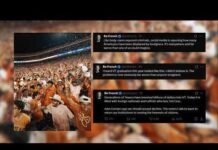
Kash Patel Gets Absolutely Smoked in Punishing SNL Sendup By Aziz Ansari: ‘I’m the First Indian Person to Suck at Their Job!’ #Mediaite https://t.co/iE5ExlwGTf
— #TuckFrump (@realTuckFrumper) May 3, 2026
Patel remained FBI director as of the reporting window tied to the episode, despite rumors referenced in the comedy itself. The political risk for the administration is not that SNL told jokes—it’s that a big chunk of the country is primed to believe the worst about federal leadership, whether the target is the FBI, Congress, or the White House. In an era when both sides increasingly suspect “elites” protect themselves first, every viral hit adds pressure for transparency, competence, and measurable outcomes.
Sources:
‘SNL’ Pulls Out Huge Cameo for Keystone Kash Patel Humiliation
SNL fans think Aziz Ansari ‘nailed’ his Kash Patel impression