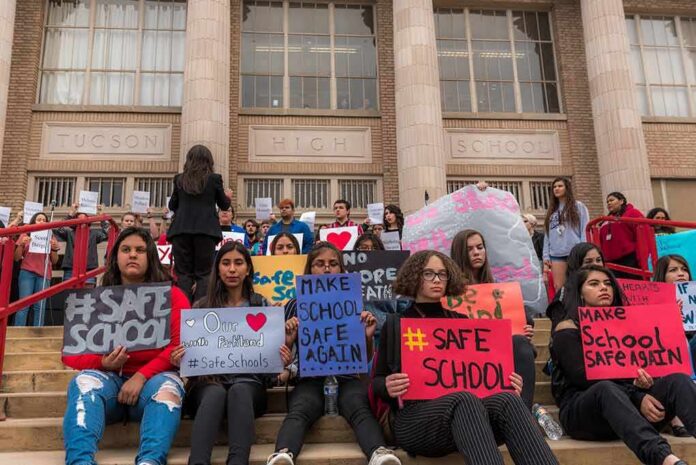
The fight over whether Parker Tirrell could play on a New Hampshire girls’ soccer team is not just a local dust‑up; it is a case study in how, after the Supreme Court’s most recent ruling, individual transgender athletes are left navigating a landscape where the law has largely closed its doors even as the human costs of exclusion remain intensely personal and unresolved.
Key Points
- A federal judge briefly allowed transgender student Parker Tirrell to play on a New Hampshire girls’ soccer team, but the lawsuit challenging the state’s ban was dropped after the Supreme Court upheld similar laws in West Virginia and Idaho.
- The Supreme Court has now made clear that states may reserve girls’ and women’s sports for “biological females” and that such bans do not violate Title IX, reshaping the legal terrain for all future school sports disputes.
- Nearly 30 states have adopted policies restricting transgender students from competing on teams aligned with their gender identity, turning individual school clashes into a national regime of exclusion.
- The Parker Tirrell episode highlights a core tension: strong legal and political momentum behind sex‑based eligibility rules versus credible evidence of emotional harm and social ostracism borne by transgender youth.
From Temporary Victory to Quiet Exit: What Happened in New Hampshire
When the girls’ soccer team at Plymouth Regional High School reported for preseason practice, Parker Tirrell was initially on the field because a federal judge said she could be. Days earlier, New Hampshire’s House Bill 1205—barring male students, as defined by biological sex at birth, from girls’ teams—was about to take effect. Tirrell, a transgender girl who had played soccer since age four and identified publicly as female since elementary school, joined another student, Iris Turmelle, in a lawsuit arguing that the ban violated federal law.
Chief Judge Landya McCafferty issued a temporary injunction in Tirrell’s favor, ordering the state and school district to allow her to “try out for, practice with, compete with, and play on” girls’ teams on the same terms as other girls while the case proceeded. Tirrell’s legal team included GLBTQ Legal Advocates and Defenders (GLAD), a leading civil‑rights group specializing in LGBTQ+ litigation, signaling that this was meant to be a test case against the new wave of state bans.
On the ground, however, the legal win did not translate into social acceptance. Local coverage and later video interviews captured Tirrell describing the emotional toll of protests and of opposing players refusing to step on the field against her team—she framed those refusals not as routine forfeits but as targeted acts of exclusion. Within months, and crucially in the immediate aftermath of the Supreme Court’s decision upholding West Virginia’s and Idaho’s bans, both Tirrell and Turmelle voluntarily dismissed their lawsuit and Tirrell quit the team. No court ever reached a final judgment on her claims; the case simply disappeared from the docket, leaving the injunction dissolved and the underlying ban in place.
The Supreme Court Ruling That Changed the Legal Terrain
The context for that quiet ending was anything but local. In West Virginia v. B.P.J. and the companion Idaho case, the Supreme Court held that states may exclude transgender girls from girls’ sports teams in public schools and that such laws do not violate Title IX or the Equal Protection Clause. Writing for the Court, Justice Brett Kavanaugh stated that “separate sports teams for biological males and biological females are reasonable” and that schools may determine eligibility for girls’ teams based on biological sex.
Two features of the ruling matter especially for cases like Tirrell’s. First, all nine justices agreed that the bans do not violate Title IX, the federal statute that has governed sex discrimination in education since 1972. Title IX permits sex‑segregated sports teams; the Court concluded that defining “female” for team eligibility in strictly biological terms does not, in itself, constitute unlawful sex discrimination. Second, the majority explicitly endorsed the premise that physiological differences between males and females are relevant to safety and competitive fairness in sport—particularly after puberty—and that states may legislate on that basis.
This does not mean every application of such laws will automatically be upheld; factual particulars can still matter, as lower courts recognized in the Arizona litigation involving prepubescent athletes where an injunction remained in place because there was no evidence of athletic advantage before puberty. But as a practical matter, the Supreme Court’s decision removed the strongest constitutional and Title IX arguments that lawyers like GLAD had been pressing in challenges such as Tirrell’s. Once that precedent was on the books, the strategic calculus for plaintiffs in a small New Hampshire case changed dramatically, which helps explain why the lawsuit was withdrawn rather than pursued to an almost certain defeat.
A National Patchwork Hardens Into a Regime
Tirrell’s experience sits inside a broader structural shift. What began with Idaho’s 2020 “Fairness in Women’s Sports Act” has become a national pattern in which roughly half the states now restrict transgender students from playing on teams that match their gender identity. By mid‑2026, analyses by civil‑rights groups and policy trackers converged on a core figure: 29 states with statewide bans or equivalent policies, 27 enacted by legislatures and 2 by state agencies.
These laws share a common design. They define eligibility for girls’ and women’s teams in terms of biological sex assigned at birth, usually verified by a birth certificate, and sometimes include enforcement mechanisms such as sex verification procedures or cause‑of‑action provisions allowing other athletes to sue if they believe an ineligible competitor took a roster spot or prize. Most apply to K‑12 sports; some extend to public colleges. Supporters present them as necessary to protect opportunities, scholarships, and safety for cisgender girls and women. Opponents view them as blanket exclusion of a small and vulnerable group of youth from the psychological, social, and health benefits of school sports.
New Hampshire joined this wave with House Bill 1205, and for a brief window its ban was partially blocked because of Tirrell’s injunction. Once the Supreme Court ruled in favor of West Virginia and Idaho, New Hampshire’s law slipped back into line with a now‑validated national model. For transgender athletes considering similar challenges in other states, the message is clear: the federal courts are no longer a promising venue for systemic relief.
Fairness, Safety, and the Limits of the Current Science
Behind the legal doctrines lies a scientific and ethical dispute that the Court only partially engages. The fairness rationale assumes a consistent, significant athletic advantage for transgender girls and women, rooted in male puberty’s effects on size, strength, and speed. Many sports scientists agree that, on average, post‑pubertal males outperform females in most speed and power metrics, and policy advocates have used this to argue that inclusion of transgender girls will displace cisgender girls from rosters and podiums. Former collegiate runner Madison Kenyon, for example, has publicly described being “pushed off podiums” when competing against transgender women and celebrated the Supreme Court ruling as a corrective.
Yet the evidence is more nuanced when it comes to youth and to individuals who have not undergone endogenous male puberty. A federal appeals court evaluating Arizona’s ban on prepubescent transgender athletes emphasized that available data show no material athletic performance difference between boys and girls before puberty, and upheld an injunction allowing young transgender girls to keep playing. Major professional bodies like the American Psychological Association have also noted the lack of empirical support for claims that allowing transgender students to play on teams matching their gender identity broadly undermines fairness at the school level.
Tirrell’s case occupies an uncomfortable middle: she is a teenager, not a small child, but the record made public does not include specific performance metrics, hormone treatment details, or medical expert testimony that would allow a precise assessment of any competitive advantage or safety risk in her specific situation. Neither side has produced a forensic analysis of her times, strength, or endurance relative to her peers; the public conversation is built instead on categories—“biological male” versus “girl”—and on political narratives.
The Human Cost: Protests, Ostracism, and Quiet Withdrawal
Whatever one’s view on competitive fairness, Tirrell’s experience underscores that the burden of implementing these policies falls on individual teenagers in highly public, emotionally charged settings. Interviews and local reporting describe her confronting protesters at games and learning that players from other schools would rather refuse to take the field than compete against her team if she was present. She characterized those decisions as making her feel like her very presence spoiled the sport for others—an internalization of stigma with predictable mental‑health consequences.
Psychological research on transgender youth in schools, while not specific to sports, consistently shows that exclusion and targeted rejection correlate with higher rates of anxiety, depression, and suicidality; inclusion and affirmation, by contrast, are associated with better mental‑health outcomes. Even if the law now permits states to exclude transgender girls from girls’ teams, it does not follow that the social practices surrounding that exclusion—public protest, online derision, dehumanizing language—are benign. The RedState coverage of Tirrell’s withdrawal, for instance, used mocking formulations like “boy pretending to be a girl,” language designed less to advance a fairness argument than to strip a teenager of dignity.
It is also telling that institutions closest to the situation—state officials, the school district, athletic associations—offered no substantive public comment when the lawsuit was dropped and Tirrell left the team. Their silence may reflect legal caution, political risk, or simple fatigue. For the student at the center, it meant there was no authoritative public voice framing her departure as anything other than defeat or repudiation, leaving space for social media narratives that framed the episode as “Game over” and celebrated the outcome as a triumph of girls “standing their ground.”
Monday evening bromide, on @RedState.
Game Over: Boy Trying to Play on Girls' Soccer Team Quits After Female Players Stand Their Ground https://t.co/7sjHZuAOv8 #NewHampshire #WomensSports #Transgender #TitleIX
— Jennifer Oliver O'Connell (@asthegirlturns) July 21, 2026
Where the Debate Goes From Here
With the Supreme Court’s ruling, the primary legal questions about states’ power to define sex‑segregated sports have, for now, been answered. States may reserve girls’ and women’s sports for biological females; Title IX does not bar them from doing so. That leaves three fronts where the debate will likely move.
First, future litigation will focus on margins and exceptions rather than frontal challenges. Cases involving very young, prepubescent athletes, or transgender youth whose puberty has been medically suppressed, will test whether courts are willing to accept blanket bans even where evidence of advantage is minimal. Second, policy arguments will shift to the level of school districts and athletic associations in states without bans, where regulators still must decide how to balance fairness, safety, and inclusion in their own eligibility rules.
Third—and this is where Tirrell’s story is most instructive—the cultural conversation must grapple with how communities treat the teenagers caught in the middle. The law may now permit exclusion based on biological sex, but it neither requires cruelty nor resolves the ethical question of how to safeguard the well‑being of transgender students who will, inevitably, continue to seek the camaraderie, structure, and joy that school sports have always provided.
In that sense, “game over” is precisely the wrong metaphor for what happened in New Hampshire. The legal contest over Parker Tirrell’s right to play ended; the larger struggle to reconcile fairness in girls’ sports with the dignity and health of transgender youth is only entering its next phase.
Sources:
redstate.com, scotusblog.com, nytimes.com, constitutioncenter.org, heysocal.com, hrc.org, wbir.com, edweek.org, aclu.org, newhampshirebulletin.com, youtube.com, bbc.com, people.com, npr.org, foxnews.com, usatoday.com, nbcnews.com