

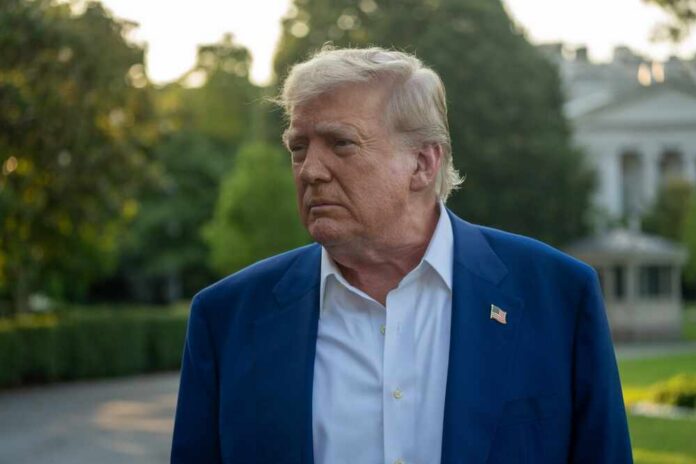
The White House says the Iran war ended “exactly as planned”—but a fragile ceasefire and unanswered questions about Iran’s nuclear stockpile make that victory claim harder to lock down.
Quick Take
- President Trump and Press Secretary Karoline Leavitt say Operation Epic Fury “achieved and exceeded” U.S. objectives in about 38–40 days.
- A two-week conditional ceasefire announced around April 8 remains shaky, with offensive operations paused but defenses still active.
- Iran rejected a temporary pause and pushed a 10-point “permanent peace” framework that clashes with U.S. demands on nukes and the Strait of Hormuz.
- Independent reporting and leaked assessments described an uncertain nuclear outcome, including claims Iran moved uranium and that damage may have produced only a months-long setback.
What the administration says it achieved in Operation Epic Fury
U.S. officials framed Operation Epic Fury as a rapid campaign that met core military objectives, including degrading Iran’s missile capacity and pressuring Tehran to accept limits tied to the Strait of Hormuz. The war began February 28, 2026, with roughly 900 strikes in the first 12 hours, according to the compiled timeline. The opening barrage reportedly killed Iran’s Supreme Leader Ali Khamenei and targeted air defenses, infrastructure, and leadership nodes.
Those claims matter domestically because “mission accomplished” language can shape public tolerance for future commitments, spending, and risk. Conservatives who prefer decisive action with limited duration will see the administration’s emphasis on speed—38 to 40 days—as proof that overwhelming force can shorten conflict. At the same time, the scale and intensity of strikes raise the bar for what the public expects as verifiable results, especially when officials say objectives were exceeded.
The ceasefire is real—but it is conditional and unstable
President Trump announced a two-week conditional ceasefire around April 8 as the conflict approached the six-week mark, with mediators including Pakistan, Egypt, and Turkey playing visible roles in de-escalation efforts. Reporting described the pause as fragile, with U.S. offensive operations halted but defensive posture maintained. Separate updates also referenced continuing strikes near key infrastructure, underscoring how quickly “ceasefire” can become a political label rather than a durable reality.
The Strait of Hormuz sits at the center of the ceasefire politics because it is a strategic choke point for global energy shipments. The U.S. position emphasized reopening or safeguarding navigation, while the Iranian position treated Hormuz leverage as part of broader demands. For Americans still feeling inflation’s bite—and for conservatives skeptical of policies that drive energy costs higher—any threat to Hormuz tends to translate quickly into concerns about gasoline prices and economic stability at home.
Iran’s 10-point plan collides with U.S. demands on nukes and withdrawals
Iran promoted a 10-point plan for permanent peace, but the reported terms conflict with U.S. objectives in key areas. The plan included demands such as sanctions relief, restrictions on future U.S. or Israeli action, and other regional provisions, while U.S. messaging stressed nuclear dismantling and security guarantees tied to shipping lanes. Trump publicly described the proposal in mixed terms—at times workable, at other times fraudulent—highlighting how negotiation can become messaging warfare.
The hardest question: what happened to Iran’s nuclear capability?
Competing accounts leave the nuclear outcome less settled than the administration’s “exactly as planned” framing suggests. The research summary points to skepticism that the campaign fully achieved all goals, noting the absence of regime change and uncertainty over uranium stockpiles. It also references a leaked assessment claiming strikes may have set back Iran’s nuclear program only by months, with assertions that uranium was moved before key facilities were hit.
Why this story fuels broader distrust of Washington—on the right and the left
Americans across the political spectrum are primed to doubt official narratives after years of shifting explanations on wars, surveillance, spending, and border enforcement. For conservatives, the concern is straightforward: if government insists a major operation “exceeded” objectives, the public deserves clear, verifiable benchmarks—especially when energy markets and military readiness are on the line. For liberals, the fear often centers on civilian harm and escalation, which the timeline also references.
The bottom line is that Operation Epic Fury appears to have produced real military effects and a temporary pause in fighting, but the most consequential objectives—Hormuz stability and the long-term nuclear outcome—remain contested in available reporting. Until the ceasefire is tested over time and independent assessments converge, Americans should treat victory declarations as political messaging first and strategic proof second. That caution is not cynicism; it is basic accountability.
Sources:
Fox News Video: White House says operation “achieved and exceeded” objectives