

New York City’s new mayor is reigniting the “equity vs. excellence” fight by targeting gifted-and-talented screening for five-year-olds—raising fears that high-achieving kids, especially from working-class families, will be the ones paying the price.
Quick Take
- Mayor Zohran Mamdani’s team says it wants to end kindergarten gifted-and-talented (G&T) testing and delay G&T entry until third grade.
- Critics argue the change would “gut” accelerated learning pathways that can help low-income high achievers access stronger schools.
- NYC’s G&T system has already shifted away from a controversial 4-year-old exam toward teacher nominations and lotteries for kindergarten seats.
- The debate is returning after earlier phase-out attempts under Mayor Bill de Blasio were reversed, with courts declining to dictate education policy.
What Mamdani Is Proposing—and What His Office Says It Isn’t
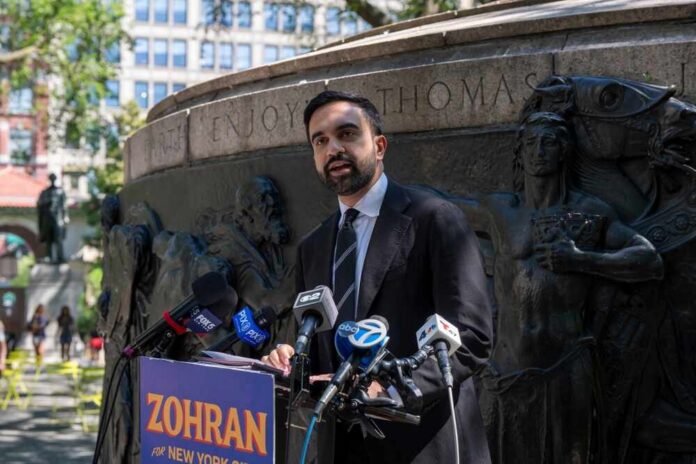
Mayor Zohran Mamdani, a self-described democratic socialist who took office in January 2026, is facing blowback over plans to end G&T screening for kindergarteners and push any formal entry point to third grade. Mamdani’s office frames the move as opposition to testing five-year-olds and early “separation,” while saying it still supports rigorous instruction for all students. The practical question is whether “rigor for all” will exist without a clear accelerated track.
The timing matters. Mamdani floated the idea during the 2025 campaign, but the proposal is now colliding with the reality of governing the nation’s largest school district. Because New York City operates under a mayoral-control model, a mayor can shape admissions policies and the structure of programs quickly. That concentration of power is precisely why parents and advocates are pressing for specifics: what replaces early identification, how resources follow students, and how schools will serve advanced learners in the early grades.
How NYC’s Gifted Programs Became a Political Flashpoint
New York City’s G&T programs sit at the center of long-running disputes over school quality, segregation, and whether selective programs preserve opportunity or restrict it. The district is majority Black or Latino and includes many economically disadvantaged students, but it also struggles to provide strong “neighborhood school” options in many areas. Over time, G&T has functioned as one reason some middle-class families stay in the public system rather than leaving for private schools or the suburbs.
Policy has also shifted before. After Mayor Bill de Blasio moved to phase out parts of elementary G&T, later city leadership reversed course, expanded seats, and leaned more heavily toward third-grade starts. The kindergarten process changed as well—moving away from the politically toxic idea of a high-stakes early exam and toward teacher nominations and lottery-based admissions. That history is why opponents of Mamdani’s plan argue the city already adjusted the system, and why they view another rollback as ideological rather than evidence-based.
Critics Warn the Biggest Losers Could Be Low-Income High Achievers
Education advocates tied to Defending Education argue that delaying or eliminating early G&T doesn’t “lift up” struggling students as much as it limits opportunities for advanced learners, including those from low-income families who may not have access to private enrichment. Their warning is straightforward: if the city’s best-defined acceleration pathway begins later, some students will miss early momentum that can compound over time—especially in reading and math, where early gains often shape later placement.
From a conservative perspective, the concern is not about protecting “elite” perks, but about preserving merit-based pathways inside a public system that already underserves many families. When government institutions respond to unequal outcomes by flattening programs, they risk punishing effort and aptitude rather than fixing root problems like weak curricula, disorderly classrooms, and inconsistent instruction. The available reporting underscores intense disagreement over whether Mamdani’s plan expands opportunity or simply reduces options for families who rely on public schools.
The Legal and Political Stakes for a City—and a Country—That Distrusts Institutions
Courts have previously upheld NYC’s G&T framework against discrimination-related challenges, with rulings emphasizing that judges should not set education policy. That legal backdrop limits what lawsuits can accomplish, but it also heightens political accountability: if the mayor changes the rules and outcomes deteriorate, the blame lands on City Hall. Mamdani’s opponents, including high-profile rivals from the 2025 cycle, have argued for expansion rather than delay—turning G&T into a defining issue about standards and governance.
Nationally, the fight fits a broader pattern that frustrates Americans across the spectrum: institutions promise fairness but often deliver bureaucracy, mixed results, and constant restructuring. Conservatives tend to see “equity” language as cover for lowering standards, while many liberals see selective programs as barriers to inclusion. With trust in government already strained, NYC’s next steps will be watched as a test case—whether leaders can raise baseline school quality without undermining excellence, or whether politics will keep driving education policy from one administration to the next.
Sources:
Education experts warn Mamdani plan could gut NYC gifted programs, hurt low-income students
Zohran Mamdani gifted-and-talented NYC school segregation Cuomo Sliwa
Zohran Mamdani election: One education policy where …
Education experts warn against Mamdani’s proposed gifted …