
The line “we have the military, that’s our leverage” captures the entire logic of modern coercive diplomacy in six words — and also its central, unresolved weakness: leverage is only valuable if it eventually converts into a deal, and the record on that conversion is far murkier than the rhetoric around it suggests.
Key Points
- U.S. officials describe naval escorts, a shipping blockade, and sanctions as a coordinated pressure campaign designed to weaken Iran’s negotiating position over its nuclear program and the Strait of Hormuz.
- The State Department has claimed the blockade cost Iran as much as $500 million a day and halted roughly 90 percent of Iranian trade, though the underlying methodology has not been independently disclosed.
- Independent analysts and academic studies dispute that pressure alone produces capitulation, pointing to expanded Iranian nuclear activity, a hardened stalemate, and no plausible military route to reopening the Strait without Iranian cooperation.
- The historical precedent — the 2015 nuclear agreement followed by its 2018 collapse — shows sanctions can draw a country to the table, but coercion without a durable diplomatic framework can just as easily produce renewed escalation.
- Gulf partners and regional analysts increasingly argue that only a phased settlement linking safe passage, an end to the blockade, verification, and the nuclear file offers a stable way out.
The Mechanics of Maritime Leverage
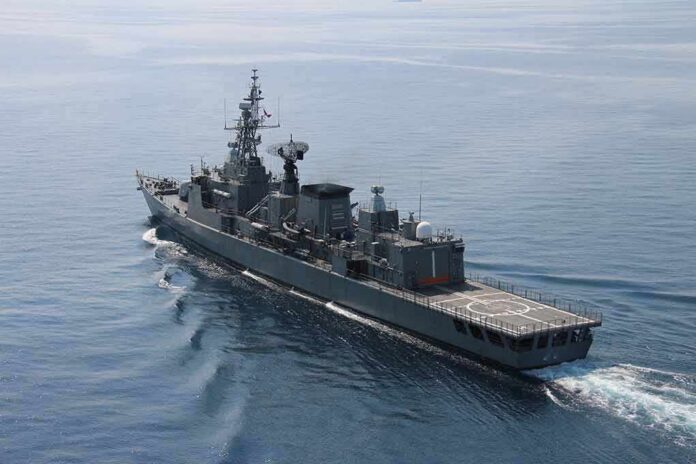
The Strait of Hormuz is a twenty-mile-wide channel through which roughly a fifth of the world’s seaborne crude oil passes, and it is precisely that chokepoint geography that makes it such an attractive lever in a confrontation with Iran. U.S. naval forces have been escorting commercial tankers, interdicting vessels linked to Iranian exports in the Gulf of Oman, and enforcing sanctions meant to choke off the revenue that funds Tehran’s military and proxy networks. Secretary of State Marco Rubio framed the strategy bluntly: every day the standoff continues, American leverage grows while Iran’s position erodes, a formulation built on the premise that economic and naval pressure compound over time rather than simply accumulate.
The dollar figures attached to that pressure are striking — up to $500 million in daily losses to Iran, with roughly 90 percent of its trade halted, according to State Department assertions. Those numbers come from the administration making the case for its own policy, and no independently published accounting, baseline, or audit trail accompanies them. That does not make the figures false; it does mean they should be read as an interested party’s claim of success rather than a verified outcome, a distinction worth holding onto as the broader argument unfolds.
The Architecture Behind the Pressure Campaign
This is not an improvised response to a single crisis but the execution of a standing policy architecture. National Security Presidential Memorandum 2 directed a maximum-pressure campaign aimed at driving Iranian oil exports to zero while countering its missile and nuclear programs. That campaign runs on two tracks simultaneously: bilateral sanctions enforcement and the reimposition of United Nations restrictions under a stack of Security Council resolutions governing enrichment, heavy water, arms transfers, and asset freezes. Gulf Cooperation Council states have publicly aligned themselves with the goal of restoring unrestricted navigation through Hormuz while explicitly tying that objective to preventing Iran from acquiring a nuclear weapon, which gives the American position a regional coalition rather than a purely bilateral one.
The strategic logic, in other words, is layered by design: naval enforcement creates physical leverage, sanctions create economic leverage, multilateral resolutions create legal leverage, and regional partnership creates political cover. On paper this is a far more sophisticated instrument than a simple blockade. Whether layering mechanisms of pressure actually produces a different outcome than past, less coordinated efforts is the question that divides supporters of the strategy from its critics.
Where the Historical Record Complicates the Case
Here the evidence becomes genuinely contested, and it deserves to be weighed rather than waved away. Independent analysts have documented that American and Israeli strikes, followed by the Strait’s closure, raised rather than lowered the risk of escalation as diplomacy stalled, with Iran calling the American counteroffer insufficient. A Washington Quarterly analysis went further, concluding there is no plausible military option for reopening the Strait and that negotiation remains the only sure path out of the impasse. A separate assessment of the blockade’s effects found that pressure had not produced Iranian capitulation and that the United States cannot reopen Hormuz without Iranian cooperation short of an occupation nobody is prepared to undertake.
The deepest challenge to the leverage thesis comes from the nuclear file itself. A published study of U.S. sanctions policy found that, despite unprecedented economic pressure, Iran did not concede or agree to a broader deal — instead, its estimated nuclear breakout time shrank from more than a year under the 2015 agreement to just a few weeks by 2024, and sanctions strengthened some networks tied to the Islamic Revolutionary Guard Corps rather than uniformly weakening the regime. CNN reporting from inside Iran similarly describes a conflict that reached stalemate with minimal military engagement and no significant diplomatic advancement, even as experts noted hardliners remained open to an eventual deal.
The 2015 Precedent and Why It Cuts Both Ways
Both camps can point to the Joint Comprehensive Plan of Action as supporting evidence, which is precisely why it is the most instructive case available. The Congressional Research Service notes that some experts credit sanctions pressure, at least in part, with bringing Iran to the 2015 negotiating table. That supports the core premise behind “we have the military, that’s our leverage.” But the same episode’s aftermath is the strongest evidence against treating pressure as self-executing: once the United States withdrew from that agreement in 2018 and pressure resumed without a matching diplomatic framework, Iran’s program expanded rather than retreated. Leverage, in short, has produced a deal before — but only when paired with a credible diplomatic offramp, not when deployed as an end in itself.
What This Means Going Forward
The durable lesson is conditional rather than triumphant: coercive pressure can create the conditions for negotiation, but it has no demonstrated record of forcing capitulation on its own, and an open-ended blockade carries real costs — to global energy markets, to shipping insurers, to the credibility of freedom-of-navigation norms that the United States itself depends on elsewhere. Analysts increasingly converge on the idea of a phased settlement tying safe passage, an end to the blockade, verification mechanisms, and the nuclear dispute together in sequence, rather than expecting economic exhaustion alone to deliver Iranian concessions. The military and the sanctions regime are genuine instruments of leverage. Whether that leverage is cashed in for a lasting settlement, or simply sustained indefinitely as a costly standoff, remains the open question the evidence has not yet answered.
Oil prices fell, with Brent below $100 a barrel, after Trump downplayed further U.S. strikes on Iran amid attacks on Saudi Arabia and tanker incidents in the Strait of Hormuz
— movesurge (@movesurge) November 9, 2026
Sources:
state.gov, industryweek.com, tandfonline.com, michigansthumb.com, acg.edu, ojs.jdss.org.pk, cnn.com, orfme.org