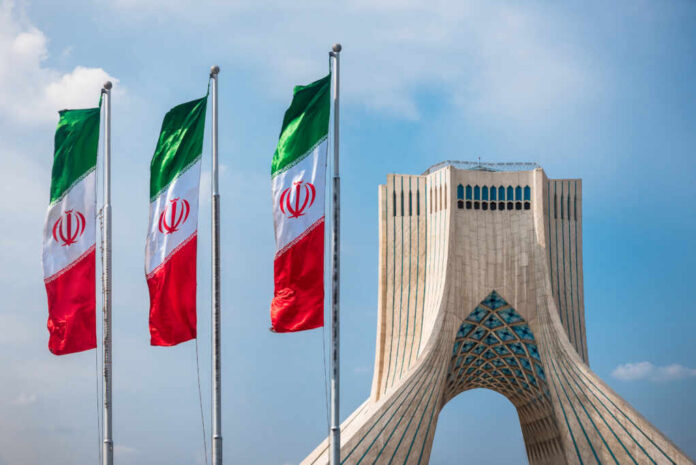
The spectacle of an American activist praising Ayatollah Ali Khamenei as the “greatest anti-imperialist leader” at his funeral crystallizes a deeper divide: the same figure is mourned as a martyr of resistance in Tehran while condemned as a terrorist and arch-villain across much of the Western political spectrum.
Key Points
- Calla Walsh, a U.S. activist and co-founder of Palestine Action US, attended Ayatollah Ali Khamenei’s funeral in Tehran and lauded him on Iranian state TV as the greatest anti-imperialist leader of her lifetime.
- Walsh’s language tracks closely with Iran’s own self-presentation of Khamenei as a global leader of resistance against U.S. power, Israel, and “arrogance,” in sharp contrast to Western portrayals of him as a terrorist and authoritarian.
- The episode fits a broader pattern in which far-left anti-imperialist circles in the West valorize anti-U.S. Middle Eastern leaders, while mainstream Western governments and media frame them primarily through terrorism, repression, and regional destabilization.
- Because Walsh’s claim about Khamenei being the “greatest” anti-imperialist is inherently subjective, the real significance lies not in its factual verifiability but in what it reveals about clashing political moralities and media ecosystems.
An American Activist at Khamenei’s Funeral: What Actually Happened
Calla Walsh’s appearance in Tehran was not incidental. Footage and posts from Iranian state media and allied organizations show her attending Ayatollah Ali Khamenei’s funeral ceremonies and speaking on Press TV, Iran’s English-language state broadcaster. In that interview, Walsh described Khamenei as “the greatest anti-imperialist leader to have lived during my lifetime,” and portrayed him as a leader “to all people of the world who struggle against imperialism, against arrogance, against Zionism, against genocide.” A LinkedIn post from a pro-BRICS financial advocacy account amplified the clip, identifying Walsh as “co-founder of Palestine Action US” and stressing that her tribute aired on Iranian state television. Social and alternative media coverage from pro-Iran and “Axis of Resistance” circles further framed her presence as emblematic of Western youth breaking with U.S. narratives and embracing Iran’s anti-imperialist posture. At the level of verifiable fact, the core is straightforward: Walsh went to Tehran, participated in events around Khamenei’s funeral, and used Iran’s state media platform to make sweeping, admiring claims about his global role as an anti-imperialist leader.
What is less firmly documented in the available research is the biographical detail that she was a “former Elizabeth Warren volunteer.” That label appears in social media discourse and framing, but the assembled sources substantiate only her later role as a Palestine Action US co-founder and a pro-Palestine, anti-imperialist activist, not the Warren campaign affiliation. For understanding her intervention at the funeral, however, the crucial point is her current positioning in transnational activism rather than the specifics of her early electoral volunteering.
Khamenei’s Death and Funeral: A Moment of Global Contestation
Walsh’s remarks land in the aftermath of a seismic event: Ayatollah Ali Khamenei, Iran’s long-serving Supreme Leader, was killed in joint U.S.–Israeli airstrikes targeting Iranian leadership compounds and military infrastructure. Together, mainstream outlets and regional reporting describe the operation as one of the most extensive assaults on Iranian targets in decades, with hundreds of civilian and military casualties and major damage across multiple cities. Iran’s government responded by declaring a prolonged period of national mourning—reports speak of forty days—and organizing an elaborate funeral procession linked symbolically to resistance, martyrdom, and defiance against external enemies. The funeral itself, covered by international broadcasters from PBS to BBC and several Indian networks, drew millions of mourners over multiple days, with Iranian officials and foreign delegations from countries such as Pakistan, Russia, China, and Gulf states paying tribute at Khamenei’s coffin. Chants of “revenge” and slogans against the U.S. and Israel were widely reported, and Iranian leaders framed Khamenei as a martyr whose death obligated renewed commitment to Iran’s revolutionary project.
Within this environment, Walsh’s contribution on Press TV sits squarely inside an Iranian narrative architecture already describing Khamenei as the embodiment of anti-imperialist struggle. Iranian state messaging and pro-regime commentators repeatedly highlight Khamenei’s role in confronting U.S. sanctions, resisting perceived regime-change operations, and supporting an “Axis of Resistance” that includes Hezbollah and Hamas. Mass rallies in favor of Khamenei during earlier crises—such as protests and sanctions episodes—have been used to argue that Western reporting “hides the truth” of popular support for the regime. Walsh’s language thus echoes an established script: Khamenei not as an authoritarian cleric presiding over repression, but as a historic leader of the oppressed against imperial domination, Zionism, and Western arrogance.
The Anti-Imperialist Frame: Why Activists Like Walsh See Khamenei as a Hero
To understand Walsh’s superlative—“greatest anti-imperialist leader”—you have to follow the anti-imperialist frame rather than conventional human rights indices. In that frame, moral weight is assigned primarily to opposition to U.S. and Israeli power rather than to domestic governance, pluralism, or civil liberties. Khamenei’s record offers ample material for this reading. From the early years of his leadership, he positioned Iran as a revolutionary state opposed to U.S. hegemony and to Israel’s existence, backed militant groups aligned against both, and treated sanctions and isolation as confirmation of Iran’s righteous struggle. He consistently opposed direct engagement with the Trump administration, publicly rejecting negotiations and accusing Washington of bad faith after the U.S. withdrawal from the nuclear deal. His rhetoric around “Death to America” is emblematic: Khamenei framed the slogan as meaning “death to the U.S.’s policies, death to arrogance,” aimed at specific American political figures, not at ordinary American citizens. This allowed sympathetic audiences to treat Iranian anti-American slogans as political critique rather than genocidal intent.
For far-left anti-imperialists in the West, such positioning makes Khamenei attractive as a symbol. Analytical work on the “axis of amplification” between Iranian state media and Western pro-regime accounts shows how far-left and conspiracy-oriented activists magnified narratives casting Iran as a bulwark against U.S. empire and Zionism, especially in the context of protests and crackdowns. In these networks, support for Iran’s government is justified less by its internal policies than by its perceived role in arming and funding armed groups confronting Israel and the U.S. across the region. Even plainly troubling episodes—electoral boycotts, harsh repression of protesters, or limited political pluralism—are reframed as necessary defensive measures against foreign-backed regime change. Against that backdrop, Walsh’s praise of Khamenei as an anti-imperialist leader operates almost as shorthand for endorsement of Iran’s geopolitical posture rather than a balanced verdict on his governance.
The Western Counter-Frame: Terrorism, Repression, and “Evil”
If Walsh’s remarks reflect one coherent moral universe, the Western governmental and media response reflects another. In that universe, Ayatollah Khamenei is defined primarily through sponsorship of terrorism, nuclear brinkmanship, and systematic human rights abuses at home. Publications and analysis from institutions such as the Alexander Hamilton Society frame Khamenei’s tenure as marked by an “undeniable commitment to the destruction of the United States and Israel,” emphasizing his role in empowering the Islamic Revolutionary Guard Corps (IRGC), supporting Hezbollah, and backing Hamas and other armed groups as instruments of asymmetric warfare. Western coverage of Iran’s protests—most notably those in 2019 and again in later years—depicts Khamenei as presiding over deadly crackdowns in which security forces killed hundreds of demonstrators, leading opposition figures like Mir Hossein Musavi to compare him directly to the Shah toppled in 1979. Rights organizations have likewise cataloged extensive repression, including arrests, executions, and censorship.
After his death, this long-standing view hardened further. Western politicians and commentators openly celebrated the assassination. The Eurasia Review and other outlets documented how figures such as Donald Trump branded Khamenei “one of the most evil people in history,” describing the joint U.S.–Israeli operation as an act of “justice” for Americans and others allegedly killed or maimed by Iran’s leadership. Some European and North American opinion pieces went further, castigating Western media as sometimes too soft on Iran’s regime, or as failing to cover Iranian democratic aspirations sufficiently. In this context, Walsh’s appearance on Iranian state TV is framed not as a brave dissent but as collaboration with a foreign propaganda machine, especially given that Press TV is openly state-controlled and has a track record of amplifying regime narratives and marginalizing dissent.
Polarization Over Khamenei: Two Moral Logics, Not Just Two Media Lines
The Walsh episode is not an isolated aberration; it sits within a broader pattern of ideological polarization over authoritarian, anti-Western leaders in the Middle East. Comparable divides have surfaced around figures such as Hezbollah’s Hassan Nasrallah, Hamas leader Yahya Sinwar, and earlier Iraqi leader Saddam Hussein. For certain segments of the global left and some far-right pro-regime actors, these leaders are judged primarily by their stance against U.S. and Israeli power and by their rhetorical vocabulary of resistance. For Western governments and mainstream media, the evaluative baseline is different: terrorism, regional instability, and domestic repression carry more weight than anti-imperialist rhetoric. These competing moral logics make argument over a label like “greatest anti-imperialist” largely incommensurable. Anti-imperialists can cite Khamenei’s refusal to capitulate to sanctions, his direct communication with Western youth urging them to study Islam from primary sources rather than media portrayals, and his role in sustaining a regional network resisting U.S. influence. Critics can point to violent crackdowns on protests, praise for counter-protesters who confront demonstrators, insistence on “epic” elections amid historically low turnout, and ideological commitments to Israel’s destruction.
Walsh’s pronouncement that Khamenei opposed “genocide” is particularly contested: while it aligns rhetorically with Iranian claims to defend Palestinians and other oppressed populations, Western analysts look at the regime’s actions—support for armed groups engaged in indiscriminate attacks, internal repression, and regional proxy wars—and see participation in, rather than resistance to, mass violence. The available evidence does not validate Walsh’s “greatest” claim in any empirical comparative sense; that language is clearly normative and rooted in her own political commitments. But it does illuminate how a subset of Western activists re-map moral evaluation onto a single axis—their states’ imperial role—and treat opposition to that role as morally decisive.
Media, Legitimacy, and the Question of Credibility
Walsh’s decision to voice her views on Press TV, rather than in independent outlets, inevitably shapes perceptions of credibility. For many Western observers, a message broadcast on Iranian state television is presumed to be part of a deliberate propaganda strategy, not an autonomous act of analysis. Research on regime media and Western proxies shows how Iranian outlets strategically platform sympathetic foreign voices to create the impression of growing global support and to validate narratives about Western media bias or conspiracies against Iran. At the same time, alternative and pro-Iran outlets criticize what they describe as Western media’s “civilization scripts”—framing Iran as barbaric or irrational—and accuse Western journalists of acting as accessories to their own governments’ military campaigns. Walsh’s appearance thus feeds into a mutually reinforcing cycle: her praise is used in Iran to show Western youth allegedly breaking free from imperial lies, while in the U.S. it is cited by critics to demonstrate how anti-imperialist activism can slide into apologetics for authoritarian regimes.
The question for a critical observer is not whether Walsh “got it right” in an objective ranking of anti-imperialist leaders—there is no agreed metric for that—but what her intervention reveals about the political and media ecosystem of which she is a part. It shows how segments of Western activism now operate transnationally, aligning more with foreign states’ narratives than with their own governments’ positions, and how authoritarian regimes seek out such voices to legitimize their claims of broad global support. It also shows how moral judgment about a figure like Khamenei can diverge radically depending on whether the benchmark is domestic civil liberty or geopolitical resistance to U.S. power.
Where the Evidence Leaves Us
When the rhetoric is stripped away, the empirical ground is firm on only a few points. Khamenei was a central architect of Iran’s post-1979 state, held power for decades, and was killed in coordinated U.S.–Israeli strikes that triggered massive mourning and a complex geopolitical fallout. He consistently defined himself in opposition to U.S. and Israeli influence, backed militant proxies, and oversaw a regime that combined limited electoral mechanisms with extensive repression. Walsh, a U.S. activist connected to Palestine Action US, chose to praise him from Tehran’s funeral ceremonies as the greatest anti-imperialist leader of her lifetime, using language tightly aligned with Iran’s own self-description. The “greatest” label is untestable and ideological; the rest is well-documented.
Understanding the episode thus requires less adjudication of Walsh’s judgment than clarity about the clash of frameworks she traverses. For one camp, Khamenei will remain a symbol of resistance against empire; for another, he will remain a violent authoritarian whose death was cause for celebration. Walsh’s tribute did not change those entrenched views. It did, however, put their collision on global display.
𝐅𝐎𝐑𝐌𝐄𝐑 𝐖𝐀𝐑𝐑𝐄𝐍 𝐂𝐀𝐌𝐏𝐀𝐈𝐆𝐍 𝐀𝐈𝐃𝐄 𝐀𝐓𝐓𝐄𝐍𝐃𝐒 𝐊𝐇𝐀𝐌𝐄𝐍𝐄𝐈’𝐒 𝐅𝐔𝐍𝐄𝐑𝐀𝐋, 𝐂𝐀𝐋𝐋𝐒 𝐅𝐎𝐑 𝐀𝐌𝐄𝐑𝐈𝐂𝐀 𝐓𝐎 𝐁𝐄 𝐀𝐁𝐎𝐋𝐈𝐒𝐇𝐄𝐃
Calla Walsh spent her teenage years volunteering for Sen. Elizabeth Warren’s 2020 presidential campaign and later… pic.twitter.com/bDrFknBxuh
— M.A. Rothman (@MichaelARothman) July 5, 2026
Sources:
thegatewaypundit.com, linkedin.com, youtube.com, facebook.com, instagram.com, nytimes.com, nbcnews.com, bbc.com, aljazeera.com, en.wikipedia.org, turkiyetoday.com, alexanderhamiltonsociety.org, thehill.com, rferl.org, iranintl.com, jpost.com