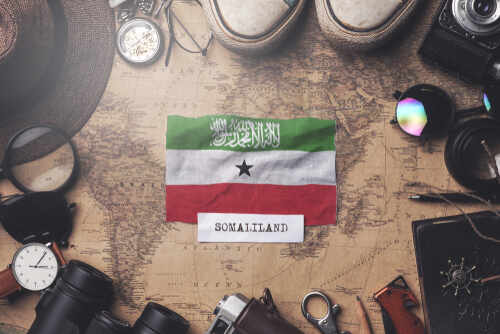
When a tiny, unrecognized African region can spark a 16-nation diplomatic firestorm over Jerusalem, it exposes just how fragile the global order really is, and how little control ordinary citizens have over the powerful players pulling the strings.
Story Snapshot
- Sixteen Arab and Islamic governments denounce Somaliland’s reported “embassy” in Jerusalem as illegal and void under international law.[2][7]
- Somaliland claims new ties with Israel after recognition in 2025, turning a local secession dispute into another Jerusalem sovereignty flashpoint.[1][2]
- Both sides weaponize legal language while millions of Palestinians and Somalis see little change on the ground.[1][2][5]
- The clash follows a familiar pattern where symbolic moves in Jerusalem inflame tensions but rarely solve real-world injustices.[1][3][5]
Arab and Islamic States Call Somaliland’s Move “Illegal and Unacceptable”
Foreign ministers from at least fifteen Arab and Islamic countries, including Egypt, Saudi Arabia, Qatar, Jordan, Turkey, Pakistan, Indonesia, Somalia, and the Palestinian Authority, issued a joint statement condemning Somaliland’s reported plan to open an “embassy” in Jerusalem.[1][3] The statement describes the move as “illegal and unacceptable,” framing it as a “flagrant violation of international law and relevant international resolutions” tied to the status of Jerusalem and occupied Palestinian territory.[2][5] By labeling it a “so-called” embassy of a “so-called Somaliland region,” the ministers pointedly refuse to recognize Somaliland’s claim to statehood while challenging any attempt to legitimize Israel’s sovereignty over the city.[1][3]
The same joint statement reiterates a long‑standing Arab and Islamic position: that East Jerusalem has been occupied Palestinian territory since 1967 and that any measures aimed at altering its legal or historical status are “null and void and without legal effect.”[1][2][5] Ministers link the Somaliland move to a wider pattern of unilateral steps they say entrench “an illegal reality” in Jerusalem and the broader occupied Palestinian territories.[2][5] In doing so, they situate this small diplomatic episode inside a decades‑long fight over land, sovereignty, and international law that many ordinary citizens see as repeatedly discussed but rarely resolved.
Somaliland’s Search for Recognition Collides with Jerusalem’s Status
Somaliland, which broke away from Somalia in 1991 but remains unrecognized by the United Nations, has pursued ties with Israel as part of its long campaign for international legitimacy.[1][2] According to reporting referenced in the joint condemnation, Israel formally recognized Somaliland in December 2025, becoming the first United Nations member to do so.[2][4] Somaliland then announced plans to open its first‑ever embassy abroad in Jerusalem, while Israel was expected to open a diplomatic office in Somaliland’s capital, Hargeisa.[1][2] Somaliland’s representative in Israel reportedly said the Jerusalem embassy would open “soon,” suggesting that the current dispute centers on a planned or newly opened mission rather than a fully established, long‑running embassy.[1]
Somalia’s internationally recognized federal government, which still claims Somaliland as part of its territory, joined the Arab and Islamic statement in rejecting the move.[1][7] The ministers stressed their “strong support for the unity, sovereignty, and territorial integrity of Somalia,” explicitly opposing any step that might legitimize Somaliland’s secession.[1] That means the same diplomatic act in Jerusalem is being fought on two fronts: as a symbolic recognition of Israeli control over the city and as a quiet upgrade of Somaliland’s statehood claims at Somalia’s expense. For citizens watching from the outside, this looks less like a principled fight over law and more like powerful actors using legal language to defend their own political interests.
International Law, United Nations Resolutions, and a Repeated Script
The language used against Somaliland’s Jerusalem move closely mirrors other recent joint statements by Arab and Islamic states on Israeli actions in occupied territory.[2][4][5] In February 2026, eight Arab and Islamic foreign ministers condemned Israeli decisions aimed at imposing “unlawful sovereignty” and entrenching settlement activity in the occupied West Bank, again affirming that Israel has “no sovereignty over the occupied Palestinian territory” and calling such measures “null and void.”[5] A separate joint statement regarding remarks by the United States ambassador to Israel similarly rejected any suggestion of Israeli control over occupied Arab lands as a violation of the Charter of the United Nations.[4] These documents show a highly standardized diplomatic script: invoke international law, cite United Nations Security Council resolutions, and declare unilateral measures void.[4][5]
That script reflects a core legal reality—numerous United Nations resolutions and an advisory opinion by the International Court of Justice reject Israel’s annexation of territory captured in 1967—but it also reveals the limits of the current system.[4][5] Despite decades of such statements, settlement expansion has continued, and the status of Jerusalem remains unresolved.[2][5] Citizens across the political spectrum, in the United States and abroad, increasingly see this as evidence that international institutions and foreign ministries talk a big game about law and rights while allowing facts on the ground to harden. The Somaliland episode fits that pattern: a flurry of condemnations, sharp legal language, but no clear mechanism to change behavior or improve life for Palestinians or Somalis living under contested authority.
Symbolic Embassies, Real‑World Frustrations, and the Deep State Question
For many Americans watching from afar, the fight over whether a small, partially recognized territory can open an office in Jerusalem may feel remote, but the underlying dynamics are familiar. Governments and international bodies argue over symbols—embassies, resolutions, communiqués—while everyday people cope with inflation, insecurity, migration pressures, and widening inequality. The Somaliland‑Jerusalem controversy highlights how diplomatic elites can treat cities and populations as chess pieces in a global game, reinforcing public suspicion that a class of insiders, sometimes called the “deep state,” protects its own power first.[1][2][5]
The Republic of Somaliland opening its embassy in Jerusalem, Israel and the condemnation from the Arab and Muslim world perfectly illustrates the gap between the two main theories of statehood in international law:
The Declaratory Theory (De Facto): This theory argues that if an… pic.twitter.com/9iNyA9dvOo
— Somaliland Today (@JSLToday) May 25, 2026
At the same time, this episode shows how fragile key principles like sovereignty, self‑determination, and the rule of law have become. Arab and Islamic states insist that any recognition moves in Jerusalem undermine Palestinian rights and violate United Nations resolutions, yet they remain divided on practical steps beyond condemnation.[2][5][7] Somaliland’s leaders pursue recognition through a controversial partnership with Israel, while Somalia and its allies reject the move as illegal secession wrapped in diplomatic theater.[1][7] For citizens on the left and right who believe the system is rigged by powerful governments, international organizations, and well‑connected elites, the message from this story is unsettling but clear: the same institutions that struggle to protect long‑promised rights in Jerusalem are often the ones failing to secure accountability, fairness, and opportunity at home.
Sources:
[1] Web – 15 Arab and Islamic Countries Condemn Somaliland Plan For …
[2] Web – 16 Arab Islamic Countries Condemn Somaliland’s Opening of …
[3] Web – Over a dozen Muslim-majority countries condemn Somaliland’s …
[4] Web – Foreign ministers of Saudi Arabia, other Muslim countries condemn …
[5] Web – Sixteen Arab and Islamic Nations Condemn Planned “Somaliland …
[7] Web – 17 Arab Islamic Countries Condemn Somaliland’s Opening of …