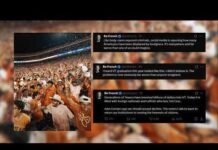

The central fact here is not the spectacle of a livestream; it is the emergency-response pattern that followed it: multiple reports of apparent self-harm, police calls, a welfare check at Perez Hilton’s home, and a crisis-style de-escalation rather than a dramatic on-camera police intervention.
Intro Header
- The strongest confirmed element is the law-enforcement response, not the precise content of the livestream.
- Multiple outlets converge on the same sequence: viewers reacted, police were called, deputies came to the residence, and family members were contacted.
- The most graphic details remain secondhand, repeatedly framed with qualifiers like “appeared,” “reportedly,” and “what looked like.”
- The incident fits a familiar social-media crisis pattern in which platform video, audience alarm, and emergency response outrun primary documentation.
The confirmed core: police response, not forensic certainty
According to multiple contemporaneous reports, Miami-Dade law enforcement responded after receiving multiple calls about a livestream involving alleged self-harm, and deputies then went to Perez Hilton’s residence. ABC7 reported that the livestream appeared to show Hilton harming himself with a knife and that deputies spoke with family members on scene before tactically disengaging while continuing to monitor the situation. Rolling Stone likewise reported that the sheriff’s office confirmed receiving numerous calls, locating the individual at home, and shifting into de-escalation mode.
That sequence matters because it establishes what official authorities were willing to confirm: a crisis response, not a judicial finding, and not a forensic conclusion about every image circulating online. The sheriff’s office language, as relayed by ABC7 and Rolling Stone, is explicitly behavioral and operational: time, distance, communication, and reduced risk. In other words, the public record supplied here supports the existence of an emergency response; it does not independently authenticate each sensational detail repeated in secondary coverage.
Why the graphic claims spread so quickly
The more vivid the allegation, the faster it travels. In this case, the story hardened around a cluster of highly shareable claims: nudity, blood, a knife, repeated cutting, and statements attributed to Hilton on the stream. Those details were repeated across tabloids, commentary accounts, and reposted social fragments, producing a credibility cascade in which repetition can be mistaken for confirmation. That is a familiar failure mode in social-media crises: once the first wave of audience reaction is public, later writers often inherit the summary rather than the source.
The supplied reporting itself signals that uncertainty. Times Now used “reportedly” and “what looked like blood,” while other posts described the situation as an “apparent” crisis or explicitly noted that nothing had been officially confirmed yet. One X post even suggested the possibility of fake blood. Those qualifiers are not cosmetic; they are the border between observation and assertion. They tell you that the strongest available evidence is still the emergency-response record, not a verified reconstruction of the livestream frame by frame.
The real evidentiary gap is the missing primary record
What is absent is almost as important as what is present. In the supplied material, there is no timestamped incident report, no 911 audio, no bodycam footage, no official incident number, and no authenticated copy of the TikTok livestream itself. That absence does not erase the police response, but it does limit what can responsibly be said about the underlying act. Was the stream genuine self-harm, a simulated act, or an ambiguous crisis performance? The record here does not settle that question.
This is where the story becomes less about celebrity gossip and more about evidentiary discipline. Law enforcement often releases only a narrow public description during mental-health-related calls, especially when officers prioritize de-escalation over confrontation. Platforms can remove the content quickly, which protects viewers but also strips away the best contemporaneous evidence. By the time journalists and commentators begin quoting one another, the original object of analysis may already be gone.
Perez Hilton is trending in the US because the blogger is receiving attention for inflicting self-harm while on a TikTok livestream in his Miami home on the night of Tuesday, August 4.
Viewers alerted authorities after the 48-year-old celebrity gossip blogger broadcast himself… pic.twitter.com/e4v0z3anQv
— Why It Is Trending (@trendingblog247) August 5, 2026
Why crisis framing changes the meaning of the story
The sheriff’s office framing places the episode in the familiar category of a mental health crisis response, not a criminal episode with a complete evidentiary record. That distinction matters. Crisis response is built to reduce immediate harm; it is not designed to generate a public forensic narrative. Deputies create time and distance, engage family members, and monitor for escalation. Those are prudent tactics, but they also mean the public may never receive the kind of granular detail that would settle the most disputed claims.
Broadly, this case fits a pattern documented in research on live-streamed suicidality and self-harm online: signaling, audience reaction, crisis response, and then a messy aftermath in which the public sees fragments before it sees facts. The platform environment rewards speed over verification, and self-harm content can be especially difficult to moderate in real time. The result is a familiar asymmetry: the audience sees the drama first, while institutions release only the minimum necessary information afterward.
What can be said now, and what cannot
What can be said now is straightforward. Multiple reports say police were called to Perez Hilton’s home after a livestream that appeared to show self-harm, and deputies then responded, spoke with family members, and de-escalated the situation. What cannot be said from the supplied record is equally important: that the livestream has been independently authenticated, that every graphic claim is verified, or that the exact conduct on camera has been publicly documented by primary sources. The current record supports a crisis-response story far more strongly than it supports a fully proven visual account.
Sources:
thegatewaypundit.com, pagesix.com, timesnownews.com, thepostmillennial.com, timesofindia.indiatimes.com, x.com, mixvale.com.br, pmc.ncbi.nlm.nih.gov, pubmed.ncbi.nlm.nih.gov, mdpi.com, medrxiv.org