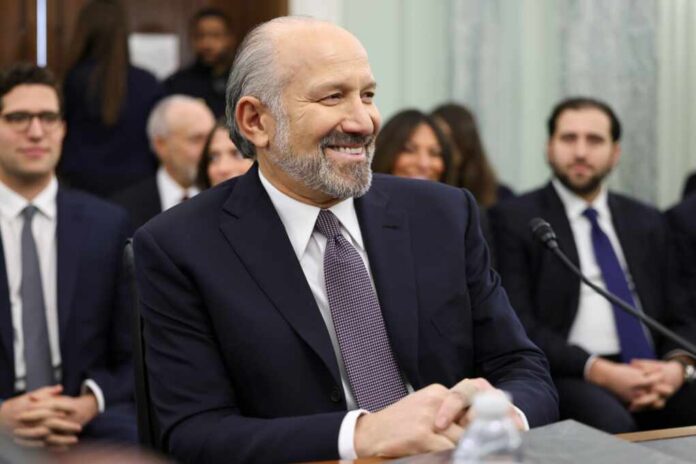
European tech regulations are now posing a direct threat to America’s digital future, sparking a fierce debate over constitutional freedoms, U.S. sovereignty, and the nation’s economic strength. In a high-stakes confrontation in Brussels, Secretary Lutnick of the Trump administration challenged EU officials over sweeping policies deemed to unfairly disadvantage U.S. tech giants. The administration has vowed to defend American innovation and reject what it views as globalist overreach, framing the battle as a defense of free markets and core constitutional values against foreign bureaucratic encroachment.
Story Highlights
- Secretary Lutnick confronts EU officials in Brussels over regulations targeting U.S. tech giants.
- Trump administration vows to defend American innovation and reject globalist overreach.
- Regulatory barriers in Europe seen as undermining U.S. jobs, economic strength, and digital leadership.
- Conservative leaders link EU moves to broader threats against constitutional rights and free enterprise.
Lutnick Stands Firm Against EU Tech Barriers
Secretary Lutnick, representing the Trump administration, met with European officials in Brussels to challenge sweeping EU tech regulations. Lutnick argued these policies unfairly disadvantage American companies, harming U.S. innovation and economic growth. The meeting marks a direct effort to push back on what conservatives view as European overreach, with Lutnick positioning the U.S. as a champion for free markets and constitutional protections. This stance resonates with many Americans who are wary of foreign influence on domestic industries.
The EU’s digital policies include restrictions on data flows, heavy compliance requirements, and targeted measures against leading U.S. tech firms. American officials contend these rules are designed to curb competition rather than protect consumers, resulting in billions lost for U.S. businesses and workers. Conservative commentators see this as another instance of global bureaucracies attempting to dictate terms to American companies, threatening the principles of limited government and economic freedom.
Commerce Secretary Howard Lutnick says the US has talked with the European Union about rolling back tech rules in exchange for “a cool steel and aluminum deal" https://t.co/bdrUlmELbn pic.twitter.com/XbvUABgFth
— Bloomberg TV (@BloombergTV) November 24, 2025
Trump’s Administration Defends U.S. Tech Leadership
President Trump’s administration has made technology leadership a cornerstone of its economic agenda, prioritizing deregulation, investment in AI, and the defense of U.S. companies abroad. By advancing executive orders that modernize digital infrastructure and streamline compliance, the White House aims to counteract foreign regulatory barriers. Recent successes include record investment pledges, new research institutes, and decisive action to block unfair trade practices. Supporters highlight these moves as critical victories for job creation and constitutional rights, contrasting them with what they perceive as the failures of past administrations.
Trump’s approach has not only restored confidence in American markets but also reinforced national security interests. Efforts to protect U.S. digital assets from foreign manipulation are widely praised among conservatives, who view them as essential for safeguarding individual liberty and American technological superiority. The administration’s willingness to confront international organizations, including the EU, demonstrates a renewed commitment to putting American interests first.
Regulatory Overreach and Threats to Constitutional Values
Many conservative leaders link the EU’s regulatory push to broader concerns about government overreach and erosion of constitutional values. The Trump administration’s response is framed as a defense of core principles: free enterprise, personal liberty, and national sovereignty. By rejecting globalist policies that undermine U.S. law and economic interests, officials aim to uphold protections for American workers, businesses, and families. Critics warn that unchecked foreign influence could lead to restrictions on free speech, property rights, and the Second Amendment if allowed to shape U.S. policy.
Grassroots activists and policy analysts stress the need for vigilance, urging lawmakers to resist any attempt to harmonize U.S. rules with those of international bodies. The Brussels meeting is seen as a pivotal moment in the ongoing battle to preserve American autonomy. While limited data is available on the full outcome of the negotiations, key insights point to a deepening resolve within the Trump administration and its supporters to defend the Constitution and American values against foreign bureaucratic encroachment.
Watch the report: EU says loosening tech rules ‘not up for negotiation’ in trade talks with US • FRANCE 24 English
Sources:
US presses Europe on rules for big tech companies
US tells EU to ‘roll back’ digital rules against US tech companies | Euractiv
US to cut steel tariffs only if EU agrees to soften digital rules enforcement in return | Euronews
US trade officials push back on EU’s tech regulations amid tariff negotiations
US Commerce Secretary Urges EU to Dial Back Digital Rules Targeting American Tech | PYMNTS.com