
As agencies flag “adverse effects” and critics cry foul, President Trump’s 250-foot triumphal arch plan is still moving forward near Arlington National Cemetery.
Story Highlights
- National Park Service reviews say the arch would harm historic views, but the project continues.
- A federal arts panel granted concept approval while asking for design changes.
- Veterans and local critics have filed lawsuits to stop construction.
- Bill Kristol blasted the arch as vulgar and “not American architecture”.
What Is Proposed and Where It Would Stand
President Trump proposes a 250-foot triumphal arch on federal parkland at Memorial Circle, near Arlington National Cemetery and just across the Potomac River. White House statements describe a landmark meant to honor America’s 250th birthday and to attract visitors for decades. Trump called it “the GREATEST and MOST BEAUTIFUL” arch and praised plans filed with the federal Commission of Fine Arts in April 2026. Supporters say great nations build great monuments and claim it will boost national pride.
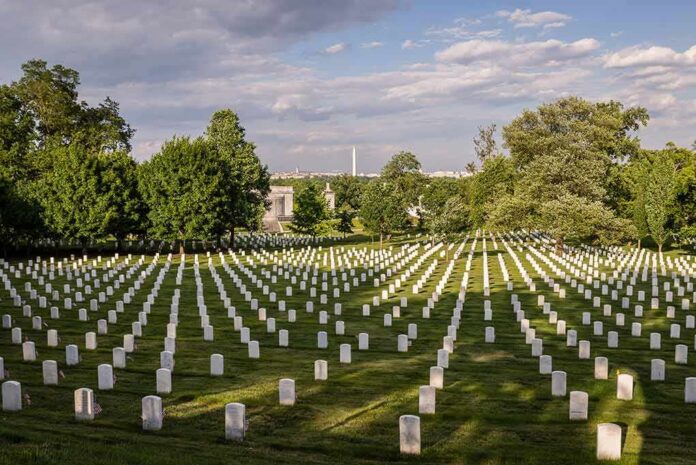
The site matters. Memorial Circle links the Lincoln Memorial to Arlington National Cemetery. Planners long treated this corridor as a solemn gateway. The arch would sit in a traffic roundabout where people enter a space tied to sacrifice and memory. That is why emotions run high. Backers talk about patriotism and tourism. Opponents focus on scale, tone, and fit with a landscape that honors the nation’s war dead.
Federal Reviews and Acknowledged “Adverse Effects”
The National Park Service concluded the arch would cause “adverse” effects to dozens of historic properties and important sightlines across Washington. Reports highlight how a 250-foot tower could dominate views that now link key monuments and historic homes. Despite those findings, the administration is keeping the project at the proposed site. Officials argue the national purpose outweighs the visual costs and say mitigation steps can reduce harm.
The Commission of Fine Arts, which reviews designs for federal projects, gave concept approval in April. The vote allowed the idea to advance while urging changes to address massing, materials, and how the arch meets the ground. That split message—yes to the concept, but fix the design—captures the core tension. The panel recognized the project’s ambition yet warned that scale and detailing could overwhelm the setting if not refined.
Public Backlash, Lawsuits, and Why People Are Upset
Three Vietnam War veterans and an architectural historian sued to block the arch, arguing that it violates planning rules and disrespects a sacred approach to Arlington. Local Democrats and some conservatives also object. Representative Don Beyer criticized the plan, and activists push for alternative sites or a different form of commemoration. The legal fight centers on process, authority, and whether agencies followed preservation laws meant to protect historic views.
Conservative writer Bill Kristol labeled the design “undistinguished, vulgar, and overbearing,” and argued it is “not American architecture.” He compared the symbolism to foreign “triumphal” styles that celebrate strongmen, not citizens. His words struck a chord because they echo a wider worry. Many Americans feel leaders use public spaces to promote themselves, while basic needs like affordability, safety, and fairness get less attention.
Why This Debate Resonates Beyond Design Taste
Federal reviews that admit real harms, yet greenlight the project anyway, feed a common belief on the left and right: powerful people bend rules while the rest of us live with the outcome. The location, size, and style make the arch more than an art debate. It is a test of how we balance honor for the nation with humility in a place of mourning, and how accountable our processes are when big visions collide with shared spaces.
There are paths forward other countries and cities use in similar fights. Options include moving the project, shrinking it, or reframing it with context that honors service without changing historic views. The scholarship on contested monuments shows that early and open public input helps avoid zero-sum outcomes. Washington has solved tough design conflicts before. A transparent process that centers veterans and families could still shape a result most Americans can accept.
Sources:
twitchy.com, alternet.org, politico.com, thenewcivilrightsmovement.com, abc7ny.com, cnn.com, detroitnews.com, ktvq.com