As rival regimes quietly ring key sea lanes with land-based anti-ship missiles, America’s trade routes and Navy supply lines are becoming political hostages in a strategic arms race most voters never heard about.
Story Snapshot
- Authoritarian states are turning land-based anti-ship missiles into tools to threaten shipping and pressure the United States and its allies.
- U.S. doctrine calls these systems “complementary,” but adversaries see them as leverage to create chokepoints and disrupt global trade.
- China, Russia, and other regional powers are building dense coastal missile networks that complicate U.S. naval operations.
- Conservatives must weigh how to strengthen deterrence without empowering globalists who want to use shipping crises to expand government control.
How Land-Based Missiles Turn Coastlines Into Political Weapons
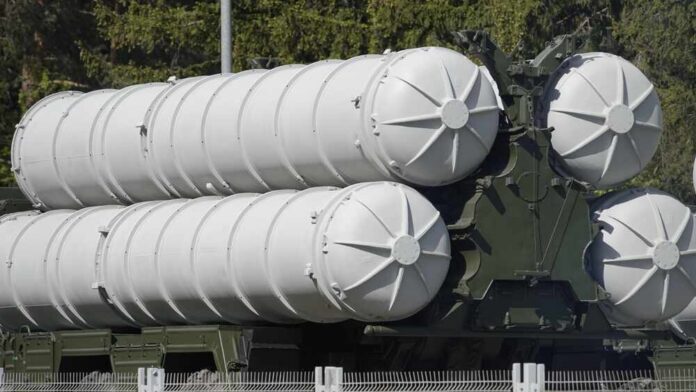
Modern land-based anti-ship missiles combine long range, precision guidance, and mobile launchers, allowing hostile governments to threaten shipping lanes from the safety of their own territory.[3][4] These missiles are specifically designed to home in on large surface ships that cannot outrun or outmaneuver an incoming weapon once it has locked on.[3] Because they can be dispersed on trucks or concealed along coastlines, they are hard to find and destroy, giving coastal states a powerful tool to intimidate foreign shipping.[1][5]
Strategists now worry that adversaries could use these missile networks not only for war, but for political coercion in peacetime.[4][5] By hinting they might target ships near narrow passages, anti-American regimes can spook insurers, raise shipping costs, and disrupt trade without firing a shot.[3] Every spike in freight and energy prices hits American families, farmers, and small manufacturers first, even while globalist elites talk about “resilience” and use the crisis to justify more centralized control over supply chains and energy policy.
What U.S. Doctrine Says – And What Our Enemies Are Really Doing
Official U.S. Army War College research describes land-based anti-ship missiles as a “complementary capability” that supports Navy and Air Force systems rather than replacing them.[5] The same study says these batteries enhance flexible deterrent options for national leaders, meaning they are supposed to give Washington more tools to keep the peace and prevent conflict.[5] Another analysis argues that land-based systems can serve as defensive sea-denial forces to offset an adversary’s naval advantage and help maintain access to contested regions without escalating immediately to large-scale war.[4]
Foreign powers, especially in the Indo-Pacific, are pushing the concept further by building dense coastal networks explicitly meant to keep U.S. ships at arm’s length.[5] Research on China’s anti-ship ballistic and cruise missiles shows systems designed to strike carrier groups and even land targets like U.S. bases on Guam, blurring the line between sea control and strategic intimidation. Additional studies describe regional states such as Japan and the Philippines fielding their own land-based maritime strike systems, confirming that coastal missile forces are becoming a central feature of twenty-first century power politics in Asia.
Why This Matters for Trade, Energy Prices, and American Sovereignty
Anti-ship missiles have always been a serious threat to surface vessels because ships are large, easy to detect, and cannot easily evade a missile once it has been launched.[3][4] When these weapons are concentrated around maritime chokepoints, they give local regimes the practical ability to interfere with the flow of oil, grain, and manufactured goods that keep the global economy running.[4] Even a temporary closure or “threat period” can send prices soaring, hitting American consumers with higher fuel costs, grocery bills, and inflation that punishes savers and retirees.
There is also YJ-21. They still have a lot in stock.
And then there are the land based anti-ship missiles. Like the DF-21D, DF-26, DF-100, etc.
They have way too many.
— Felix Su (@felix375) May 28, 2026
Analysts warn that land-based missile deployments provide regimes like the Chinese Communist Party with low-visibility leverage: they can raise maritime risk for U.S. and allied shipping while blaming market reactions or “regional tensions.”[4] That kind of engineered instability creates the perfect pretext for international bureaucrats and climate-focused global planners to demand more centralized control over shipping, energy routing, and production, sidelining national sovereignty in the name of “managing systemic risk.” For constitutional conservatives, that is an economic and political double threat.
Balancing Deterrence, Naval Power, and Limited Government
Defense analysts close to U.S. doctrine argue that building our own land-based anti-ship missile forces is necessary to deter adversaries who are investing heavily in these systems.[4][5] The U.S. Army is already working on a Precision Strike Missile variant that can hit moving ships and enemy air defenses, explicitly aimed at countering anti-ship threats and restoring freedom of maneuver for American forces. Properly integrated, U.S. coastal and expeditionary missile batteries can make it more dangerous for any hostile navy to threaten allies, sea lanes, or American territory.[5]
For conservatives, the challenge is ensuring these capabilities strengthen deterrence and protect trade without feeding endless interventions or massive new bureaucracies. The same globalists who ignored border security for years are eager to use missile-driven crises to expand international rulemaking over oceans, shipping emissions, and energy flows. A constitutional approach means demanding clear missions, accountable spending, and a focus on defending American commerce and allies—rather than using missile threats as another excuse to centralize power far from voters.
Sources:
[1] Web – The Rise of Land-Based Anti-Ship Missiles As Political Instruments
[3] Web – land-based anti-ship missiles Coverage – Breaking Defense
[4] Web – [PDF] Land Based Anti-Ship Missiles: A Complementary Capability for …
[5] Web – Anti-ship missile – Wikipedia