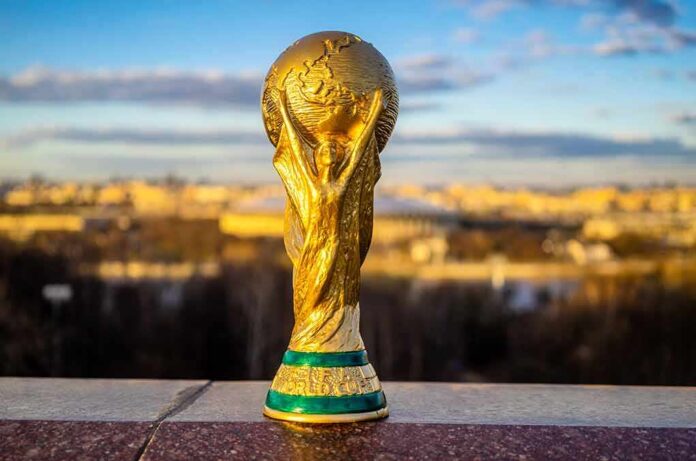
The fight over FIFA’s plan to sell a minority stake in a new World Cup commercial vehicle is not about one financing deal; it is about whether football’s governing body can turn the game’s crown jewel into an investable asset without hollowing out the sport’s public trust.
Key Points
- FIFA proposes a new $20 billion subsidiary, FIFA Forward Enterprise (FFE), and wants to sell up to 20–30% of it to private investors in return for billions in fresh capital.
- UEFA and political leaders argue the scheme “crosses a line,” insisting the World Cup’s soul and governance are not FIFA’s property to sell and warning of opaque, investor-driven influence.
- FIFA counters that it will retain exclusive control over rules, competitions, and the match calendar, framing the plan as a way to triple development funding to its 211 member associations.
- The absence of detailed transaction documents—who invests, what rights they get, and which assets move into FFE—makes the proposal look like a structural power shift wrapped in reassuring rhetoric.
- Given FIFA’s corruption history, critics see the FFE plan as the gravest governance risk yet: once part of the World Cup’s commercial engine is sold off, recovering sporting primacy over financial interests may prove impossible.
What FIFA Is Actually Proposing
At the core of the controversy is a restructuring rather than an outright sale. FIFA has announced its intention to create a new commercial subsidiary—FIFA Forward Enterprise—into which it will bundle the commercial and event operations for its flagship competitions, including the men’s World Cup and the expanded Club World Cup. This entity is being pitched to investors at a valuation of roughly $20 billion, with FIFA considering selling a “significant minority stake,” typically described as 20–30%, to private capital.
According to reporting derived from FIFA’s own communications and banker briefings, external investors would not buy shares in FIFA itself; they would buy into FFE, a company that sits below FIFA but above the day-to-day commercialization of tournaments. FIFA stresses that investors would hold non‑controlling interests and would not oversee sporting operations, with the governing body retaining exclusive authority over football laws, competition formats, calendars, and regulatory decisions. In parallel, the 211 member associations are promised both a stake and a vote: FIFA says the plan must be approved by the FIFA Council and then by the full membership before it goes ahead.
Why UEFA and Others Say This “Crosses a Line”
Europe’s governing body, UEFA, has emerged as the most vocal opponent. In a widely quoted statement, UEFA condemned the proposal as “a line that football’s governing institutions should never cross,” asserting that “the soul and governance of football are not assets to trade — especially with zero transparency as to who gains financially. None of us are the owners of football. It is not FIFA’s to sell.” This is not simply rhetorical flourish; it signals a belief that treating the World Cup’s commercial vehicle as equity capital is qualitatively different from the existing sponsorship and media-rights model.
UEFA’s resistance sits alongside political criticism in key football markets. Leaders such as UK Prime Minister Andy Burnham have described the plan as a fundamental misreading of football’s social contract, arguing that “football does not belong to investors, the World Cup is not a product, football belongs to the fans, it always has and it always will.” The threat of a European boycott of future FIFA tournaments—including the World Cup—has been floated in reporting and broadcast analysis, underscoring how existential UEFA considers the risk. For UEFA and allied stakeholders, even a minority equity stake with no formal sporting control still embeds private investor expectations into the heart of global football governance.
FIFA’s Case: Development Funding and Retained Control
FIFA presents a very different story. In its public messaging, the governing body casts FFE as a way to “expand football development funding to over $10 billion” in the coming cycle, roughly tripling allocations compared with recent years. The argument is straightforward: by monetizing future World Cup cash flows today, FIFA can distribute more money to poorer federations, invest in infrastructure and youth development, and, in President Gianni Infantino’s words, “democratize” football by closing the gap between rich and poor associations.
Crucially, FIFA insists this is not a sale of the World Cup itself. Investors would acquire a slice of a commercial company, not ownership of the competition; FIFA would continue to sanction hosts, set rules, and organize qualifiers. Public statements emphasize “minority, non‑controlling stakes,” no operational role for investors, and “exclusive authority” for FIFA over all sporting and regulatory matters. On paper, then, the structure resembles many modern financing deals in sport: capital flows into a rights‑rich vehicle, while the governing body retains formal control over the game.
There is, however, a gap between this formal assurance and what outsiders can verify. Key deal terms—shareholder rights, board composition, veto provisions, information rights, dividend policies, and exit mechanics—have not been released. Nor is there an audited cash‑flow model showing how much of the raised capital ultimately reaches development programs rather than investor returns or retained reserves. For a proposal of this magnitude, the reliance on trust in an organization with a troubled history is a genuine governance problem.
Opacity and the Shadow of FIFA’s Corruption History
Part of why this plan is treated as an existential threat rather than a routine reorganization is FIFA’s track record. In 2015, U.S. prosecutors unsealed a 47‑count indictment alleging a 24‑year racketeering conspiracy inside global football governance. FIFA officials and marketing executives were accused of soliciting and receiving over $150 million in bribes and kickbacks tied to media and marketing rights for tournaments, including the World Cup. Separate filings described broadcasters paying bribes to secure rights to multiple future World Cups.
Those investigations exposed how central commercial rights are to FIFA’s business model—and how vulnerable they have been to abuse. According to FIFA’s own figures cited in the U.S. case, roughly 70% of its $5.7 billion in revenue between 2011 and 2014 came from sale of television and marketing rights for the 2014 World Cup. It was precisely these rights that formed the “World Cup of fraud” described by American prosecutors, with shell companies, secret contracts, and off‑the‑books payments corrupting decisions about hosts and broadcast partners.
Against that backdrop, the decision to create a new commercial entity holding the inner workings of the World Cup and sell equity in it to private investors looks less like a neutral financing tool and more like a structural intensification of the same pressure points. Critics argue that formal minority labels cannot offset the practical influence that flows from sitting inside a $20 billion vehicle whose sole purpose is monetizing football’s premier competitions. Given FIFA’s past, the burden of proof lies firmly on those designing the deal to show that it does not simply institutionalize, and scale, the very dynamic that fueled prior scandals.
What Is Known – and Not Known – About the Investors
The public record around who might invest in FFE is incomplete but politically sensitive. Reporting and broadcast analysis point to Thrive Capital, the investment firm led by Joshua Kushner, as a leading candidate to anchor the investor group. Kushner’s family connections—to Jared Kushner and, through him, to President Trump—have intensified concern that FIFA may be entangling the World Cup’s commercial engine with networked political and financial influence rather than neutral capital.
FIFA has denied that Kushner personally is an investor and has rejected suggestions that Infantino is positioning himself to become commissioner or CEO of FFE after his presidential term ends. Yet without full investor disclosures, shareholder agreements, or governance charters, those denials remain assurances rather than verifiable facts. From a governance perspective, the problem is less any single name than the precedent: if a private equity‑style syndicate with deep political ties obtains direct economic exposure to FIFA’s main events, future decisions about calendars, formats, hosting, and access could be permanently refracted through investor return expectations.
🌍 FIFA World Cup Investment Plan Sparks Debate
FIFA’s proposal to sell a stake in the commercial rights of the World Cup to private investors continues to divide opinion across world football.https://t.co/NxlVbMA4qD— Timothy (@DailyFootyHQ) July 29, 2026
Financialization of Football: A Familiar Pattern, Raised Stakes
The controversy around FFE fits a broader pattern in modern sport. Over the last two decades, clubs, leagues, and confederations have repeatedly turned to external capital—private equity, sovereign wealth funds, securitized future revenues—to fund short‑term ambitions. In each case, organizers frame the move as unlocking value to invest back into the game, while critics warn about mission drift and the slow capture of sporting logic by financial logic.
What makes the FIFA proposal so explosive is its proximity to the sport’s single most powerful asset. The World Cup is not just another tournament; it is football’s global ritual, a rare shared cultural event whose legitimacy rests on a sense that it belongs to the world rather than to a balance sheet. Even when FIFA insists that it is not selling the competition itself, only a company around it, opponents see a boundary being crossed: the architecture that monetizes the World Cup is being transformed from a service contract ecosystem into an investable security.
Once that boundary shifts, unwinding it is extraordinarily difficult. Equity investors, unlike sponsors, are not simply counterparties to be rotated at contract renewal; they are co‑owners of a commercial engine with legal rights and expectations of ongoing returns. If FFE is established and partially sold, future FIFA leadership will inherit not just a tournament but a capital structure—and a set of powerful partners whose interests may diverge sharply from the non‑commercial values football supporters associate with the World Cup.
Will Anyone Actually Stop It?
Formally, the most immediate check lies with FIFA’s own member associations and Council, which must approve the plan. On paper, this looks like internal democracy; in practice, those same associations are financially dependent on FIFA’s distributions and stand to gain from any short‑term increase in funding. Observers of international governance will recognize the risk of “soft coercion”: when a vote is tightly coupled to promised money, genuine independence is hard to sustain.
Outside FIFA, UEFA and major national federations—especially in Europe—hold significant leverage. A coordinated refusal to participate in competitions run through FFE, or a boycott of future World Cups, would fundamentally impair the value investors are paying for. However, sustaining such a blockade would require unprecedented solidarity across countries, clubs, and players, many of whom also rely on FIFA competitions for prestige and revenue. Governments can add pressure, as seen in vocal criticism from political leaders and calls for regulatory scrutiny, but there is no global public authority with direct jurisdiction over FIFA’s corporate structuring.
The most realistic “stop” mechanism, therefore, is reputational and commercial. Sponsors, broadcasters, and fans can decide whether a World Cup partially financialized through FFE is still the event they wish to support. Past scandals have deterred sponsors and dented FIFA’s brand, forcing at least some internal reform. If the FFE plan triggers a comparable backlash, the governing body may judge the price of proceeding higher than the benefits. Yet that calculus depends on how clearly the long‑term risks are understood and how willing stakeholders are to resist immediate financial inducements.
Why This Moment Matters for Football’s Future
Football has lived for decades with commercialization; the modern World Cup owes much of its spectacle to sponsorship money, broadcast fees, and global marketing campaigns. What is at stake in the FFE debate is not whether money is involved, but who ultimately shapes the game’s trajectory when financial interests and sporting values collide. Given FIFA’s history of corruption built around the sale of commercial rights, critics are justified in treating any deeper entanglement with private capital as a structural hazard rather than an accounting detail.
If the plan proceeds substantially unchanged, a portion of the World Cup’s future will be governed by investor term sheets as much as by the Laws of the Game. That may bring more money into football’s poorer corners, as FIFA promises, but it will also anchor the sport’s central ritual inside an explicitly financialized framework. For supporters who still see the World Cup as a shared cultural trust, that is the gravest existential threat: not that football will stop being played, but that the logic that governs it will shift, quietly and permanently, from the pitch to the profit statement.
Sources:
independent.co.uk, espn.com, wiky.com, youtube.com, rte.ie, en.as.com, nytimes.com, biz.chosun.com, sportingnews.com