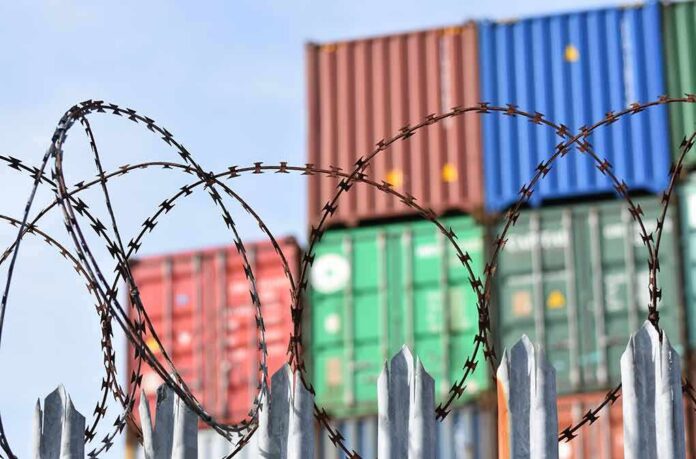
Consumer boycotts rarely move the macroeconomic needle on their own, but Canada’s coordinated “buy Canadian, avoid the U.S.” response to new tariffs has been unusually broad, politically sanctioned, and persistent—shifting travel patterns, liquor shelves, and even provincial procurement in ways that make it a real component of the trade confrontation rather than a passing social-media spasm.
At a Glance
- Canadian leaders urged citizens to avoid U.S. travel and choose Canadian products, explicitly linking personal spending to trade pressure.
- Cross-border trips from Canada to the United States fell sharply, with multiple datasets showing double-digit declines.
- Provinces and agencies paired consumer appeals with official measures, from counter-tariffs to procurement shifts.
- Economically, tariffs do the heavy lifting; the boycott amplifies them where consumers can switch easily—travel, liquor, and branded retail.
What actually happened: from political cues to personal choices
The Canadian boycott is not an amorphous vibe; it was catalyzed by explicit calls from political leaders who framed household spending as leverage in a trade dispute. British Columbia Premier David Eby told residents to “keep the pressure up” by avoiding U.S. travel and buying local, tying the appeal directly to U.S. tariffs on Canadian goods including steel, aluminum, softwood lumber, and autos. He also directed provincial agencies and Crown corporations to sever ties with U.S. vendors where feasible—cancelling contracts, non‑essential travel, and subscriptions in favor of Canadian alternatives. These are not symbolic flourishes; they are procurement instructions with budget lines attached. Alongside that political signaling came federal counter‑measures: Ottawa imposed a 25% surtax at the border on designated U.S. products, a tangible reminder to returning “snowbirds” that shopping trips now carry a premium.
Consumer behavior followed. Media reporting and official data series describe a marked pullback in cross‑border trips, especially by car. University of Toronto researchers analyzing mobile device movements estimated a year‑over‑year drop in Canadian trips to the U.S. at roughly 42%, significantly steeper than headline statistics alone suggested. Separate industry and government releases chronicled deep month‑over‑month declines through 2025, with coverage citing contractions in both auto and air travel from Canada to popular U.S. destinations. The pattern has been consistent enough that tourism bureaus in border states began to notice the revenue hole.
Where the boycott bites: substitutable categories and visible signals
Boycotts are strongest where consumers have easy substitutes and costs are salient. Liquor monopolies and private retailers across Canadian provinces reported deliberate de‑stocking or consumer avoidance of American spirits during the dispute, with a trade group citing a precipitous decline in U.S. labels—and collateral damage to non‑U.S. imports and some domestic lines as shoppers shifted categories or bought less overall. Travel is the other prominent channel: Canadians account for a dependable share of U.S. inbound tourism, and their retreat has been large enough to show up in provincial and federal travel dashboards and in airline route economics. Analysts pegged potential U.S. revenue losses from Canadian tourism shortfalls in the billions, a figure consistent with the scale of historic Canada‑U.S. visitor flows and the depth of the documented declines.
Retail is messier. “Made in Canada” shelf tags proliferated and the social media sloganizing (#ElbowsUp) helped normalize skipping U.S. brands for near‑substitutes. But even in grocery aisles where country‑of‑origin is visible, supply chains intermingle: processed foods can blend inputs, packaging, and distribution from multiple countries. That makes complete avoidance hard—and it explains why the most durable shifts cluster where provenance is clear and choice is immediate: a bourbon bottle, a flight itinerary, a hotel booking.
What does the data say about impact—tariffs versus boycotts?
On strictly measurable trade effects, retaliatory tariffs are doing the quantifiable work; broad consumer boycotts, while visible, are harder to pin to import statistics outside the tariffed lines. Economist Trevor Tombe’s summary of the available data is blunt: there is “no consistent or large-scale” change in imports beyond categories directly affected by surtaxes, even as individuals report boycotting behavior. That pattern fits the empirical base rate in boycott research: signaling and solidarity can be powerful, but sustained macro effects typically require price instruments or procurement rules with institutional teeth.
That is not the same as saying boycotts do not matter. As a force multiplier, they raise the salience of tariffs, channel demand to domestic suppliers where feasible, and—critically—reshape expectations. If U.S. spirits lose a season of shelf space, regaining it requires margin concessions and marketing spend; if a border community sees repeat Canadian visitors switch to Banff or Montreal, recapturing those routines is not automatic. The tourism declines are real in the short run: Statistics Canada and independent mobility analyses both show double‑digit year‑over‑year drops in Canadian returns from the U.S., with steeper pullbacks by road.
Mechanism: how a consumer boycott interacts with a trade war
Three channels explain why Canada’s boycott shows more bite than most. First, price: counter‑tariffs at the Canadian border make certain U.S. goods more expensive, which both nudges consumers and validates the boycott’s rationale. Second, coordination: provincial leaders did not merely cheer from the sidelines; some instructed public entities to switch vendors, institutionalizing demand diversion that persists beyond a weekend of outrage. Third, identity: Canada‑U.S. rivalry is friendly in normal times, but it is close enough—shared language, culture, and retail formats—that substituting to domestic brands imposes modest search costs. That combination—higher relative prices, formal procurement shifts, and low‑friction substitution—creates conditions where household and institutional choices can align and accumulate.
The travel channel is especially potent because it aggregates thousands of high‑ticket decisions—vacations, conferences, business trips—into a single bilateral flow. When a critical mass of travelers changes plans, airlines redeploy capacity, destination marketing budgets pivot, and cross‑border retail near ports of entry feels the downdraft. Reports through 2025 described sustained declines in Canadian trips by car and air, with New York, Florida, and Nevada among the hardest hit destinations for Canadian spend.
🇨🇦 Canada is doubling down on its push to boycott 🇺🇸 U.S. goods.
After the U.S. imposed 50% tariffs on C$27.6B of Canadian imports, Canada announced matching counter-tariffs on C$27.6B of U.S. goods — ranging from 15% to 50%, starting Sept. 8.
Meanwhile, Canadians are renewing…
— factbase (@FactbaseApp) August 29, 2026
How this likely evolves
Two truths can coexist. First, as a macro lever, tariffs remain decisive; counter‑tariffs, even on a subset of lines, are the policy instruments that show up cleanly in trade data and corporate earnings guidance. Second, this particular boycott has proved sticky and consequential where behavior is flexible and identity‑laden. Expect continued divergence: liquor shelves and tourism flows may reflect Canadian preferences and provincial policies long after tariff schedules change, while deep, input‑heavy supply chains will revert to cost and reliability fundamentals more quickly.
For businesses, the operating guidance is unromantic. If you sell discretionary experiences to Canadians, price in a slower recovery curve and court them with concrete concessions—duty‑free bundles, currency hedges, or loyalty reciprocity that closes the perceived respect gap. If you are a U.S. supplier into Canadian public procurement, assume you are competing not just on total cost of ownership but on political acceptability; Canadian agencies have live instructions to find domestic alternatives where viable. And for policymakers, the lesson is durable: consumer sentiment amplifies formal trade measures, but it is the procurement rules and the tariff codes that anchor outcomes. Canada has deployed all three, which is why this episode looks less like a social media wave and more like a coordinated campaign with staying power.
Sources:
en.wikipedia.org, cbc.ca, washingtonexaminer.com, halifax.citynews.ca, forbes.com, finance.yahoo.com, fortune.com, fodors.com