

Southeast Asia’s power story is no longer about adding plants; it is about whether electricity can be delivered, when and where fast-rising demand shows up. New digital and industrial loads are arriving on a one- to three-year clock, while transmission takes five to fifteen. That timing gap, not a shortage of ideas or even generation proposals, is emerging as the binding constraint.
At a Glance
- Electricity demand in Southeast Asia is set to climb steeply this decade and beyond, outpacing broader energy demand growth.
- More than 100 TWh of additional load by 2030 from data centers, EVs, and industry could materialize faster than grids can expand.
- Regional grid investment lags need; current spending trails what’s required to match planned generation and integrate renewables.
- Interconnection and storage are not optional extras; they are system requirements for reliability and flexibility.
The demand surge is real — and increasingly lumpy
Across ASEAN, electricity use is rising as economies urbanize, electrify transport and industry, and digitalize operations. The International Energy Agency projects regional electricity demand to grow from above 1,300 TWh today to more than 2,000 TWh by 2035 — roughly 4% annually and faster than overall energy consumption. That is a structural trend, not a cyclical bump; electrification and services-led growth push consumption toward the grid even as efficiency improves.
Layered atop that baseline growth is a new class of “lumpy” loads that do not arrive smoothly across space or time. Bain & Company’s analysis, summarized in financial press, points to more than 100 TWh of new demand by 2030 concentrated in data centers, electric vehicles, and industrial clusters — the kinds of loads that can add hundreds of megawatts in specific corridors and expect high availability. Crucially, the report underscores a tempo mismatch: these customers plan on one- to three-year development cycles, while grid expansions — permitting, right-of-way, procurement, construction, system reinforcement — routinely require five to fifteen years. The implication is straightforward: even if generation is theoretically adequate on a regional tally, local networks may be unable to deliver.
The system constraint has shifted from generation to the grid
For decades, power debates in Southeast Asia centered on plants: coal versus gas, domestic resources versus imports, long-term fuel contracts, and the renewables build-out. Those remain important, but they increasingly play second fiddle to system plumbing. The IEA’s 2026 regional outlook is explicit: grid investment has trailed what is needed to keep pace with demand and integrate new supply, with long development timelines and permitting friction slowing delivery. In 2025, grid spending in the region was tracked at roughly USD 12.4 billion — material, but below the level required to match the growth in generation and load.
That underbuild shows up in three places. First, reliability: networks designed for slower growth struggle to maintain reserve margins when large loads cluster in specific nodes. Second, flexibility: integrating variable renewables without advanced transmission and system services raises curtailment risk. Third, siting: a data center needs power at the fence line, not a promise of capacity elsewhere. This is why power developers increasingly pair new generation proposals with substation upgrades, dedicated feeders, and, where allowed, on-site storage. It is also why interconnection queues in some countries have swollen while shovel-ready network projects remain thin.
What “fixing the grid” actually entails
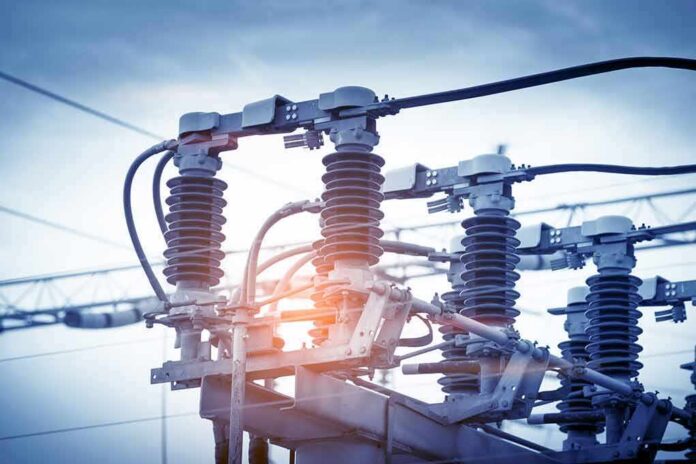
Grids are capital-intensive and slow to move by design; they are built for reliability, safety, and longevity. Correcting today’s lag involves three distinct tracks. The first is transmission: high-voltage lines and substations to move bulk power from where it is generated to where it is consumed. The second is distribution: medium- and low-voltage upgrades that handle last-mile capacity, voltage control, and protection coordination where loads actually plug in. The third is system flexibility: digital controls, reactive power equipment, and storage — typically batteries for short-duration balancing and, where geography allows, pumped hydro for longer swings. The IEA’s forward view places these together: investment in grids and storage must rise significantly from today’s roughly USD 13 billion per year to around USD 50 billion by mid-century to meet announced policy pledges — a magnitude shift, not a tweak.
Storage sits in the middle of this agenda. Properly specified, it reduces congestion by shifting energy in time, supplies fast frequency response, and can defer some network upgrades. It is not a substitute for wires; it is part of the kit that lets wires work harder and renewables run reliably. Duration and placement matter: two-hour batteries near urban load pockets solve a different problem than multi-hour assets co-located with solar or wind in remote zones. The region will need both, sequenced to system needs rather than headline megawatts.
Regional interconnection: benefits are clear, execution is hard
The ASEAN Power Grid has long promised a more resilient, flexible regional system by stitching national networks together. The logic is compelling: diversity of demand and supply smooths peaks, allows power to flow from surplus to deficit areas, and lowers the aggregate reserve requirement. The IEA frames expanded and modernized grids — including cross-border links — as essential for security and flexibility as electrification deepens. Academic and policy analyses converge on the same point: cross-border connectivity can reduce the need for storage and firming capacity by sharing variability across a larger footprint.
Delivery is the challenge. Interconnection is a multi-sovereign infrastructure problem with political, technical, commercial, and regulatory layers. Studies catalog recurring hurdles: fragmented market rules and grid codes, unsettled wheeling charges, third-country transit arrangements, and the absence of a regional coordinator with the mandate to clear bottlenecks. A pragmatic pathway is phased: deepen bilateral trades where readiness exists, standardize contracts and technical requirements, and scale to multilateral exchanges as trust and infrastructure build.
Oil is flowing, yet diesel remains expensive. AI is booming, yet data centres lack electricity. Stocks are near records, yet borrowing costs keep rising.
What connects them?
📖 This week’s Investment Insights explores the answer. 👇 https://t.co/xFh4JKqwZZ
— Mansa Tesla (@MansaTesla) October 11, 2026
Planning under uncertainty: avoiding both shortages and stranded assets
Fast-rising demand can tempt overcorrection; history offers as many examples of overbuilt capacity as of shortages. The discipline is to plan to the hourly and locational profile of demand, not just annual TWh. That means building credible country-level balances to 2030: committed generation projects, interconnection queues, reserve margins, transmission constraints, and the specific footprints of data centers, EV charging corridors, and industrial clusters. It also means stress-testing with production-cost models that reflect fuel prices, renewable profiles, and intertie limits to see how storage and wires change outcomes. Done well, this avoids paying for capacity that cannot reach the load and, equally, prevents supply crunches that deter investment.
What this means for decision-makers and investors
For governments and grid operators: accelerate transmission and distribution permitting and procurement; codify transparent interconnection processes; and target grid reinforcement where large loads are actually landing. Pair renewable tenders with network and flexibility build-outs so new megawatts are deliverable. Where feasible, advance cross-border projects with clear commercial rules and harmonized technical standards.
For large energy users: engage early with utilities on siting; co-invest in on-site or proximate flexibility; and consider diversified power procurement — grid supply complemented by behind-the-meter resources — to meet availability requirements without overtaxing local networks. For financiers: evaluate grid and storage as core infrastructure, not adjuncts to generation; bankability improves when network upgrades, flexibility services, and load commitments are contracted together.
Bottom line
Southeast Asia is not facing a monolithic “100 TWh shortage.” It is facing a timing and topology problem: demand is growing quickly and arriving in concentrated nodes, while the physical and institutional machinery that moves electrons is behind the curve. The physics is clear and the remedies are known — wires, storage, and smarter coordination — but they require moving grid investment from the periphery of the conversation to its center. The region’s competitiveness over the next decade will turn on how fast that pivot happens.
Sources:
zerohedge.com, iea.org, isear.vn, caseforsea.org, seetaoe.com, onlinelibrary.wiley.com, iseas.edu.sg, pwc.com