
When a small recreational boat capsized near Alcatraz with 19 people aboard, the real story was not only the tragedy in the water but the way San Francisco Bay’s rescue system moved instantly from routine vigilance to “all-hands” crisis mode.
Key Points
- A three-deck pontoon party boat carrying 19 people capsized and sank roughly 600 yards off Alcatraz Island, triggering a large-scale multi-agency rescue.
- One person died despite CPR, at least two others remained missing, and more than a dozen survivors were pulled from the water and treated ashore.
- The incident was first reported as a boat fire; responders on scene later saw no evidence of fire, only a mostly submerged vessel.
- San Francisco Fire Department, police marine units, the U.S. Coast Guard, Oakland marine units, and private boaters deployed 11 vessels, divers, and aircraft in a coordinated search.
- This capsizing fits a longer pattern of small-boat emergencies in the harsh waters around Alcatraz, where strong currents, wind chop, and crowding often push pleasure craft past their limits.
From “Boat Fire” Call to Mass-Casualty Rescue
The emergency began like many maritime crises: with an imprecise, high-stress call. Dispatchers received a report of a boat “on fire” in San Francisco Bay, about 600 yards off Alcatraz Island, mid-afternoon on a busy day for pleasure traffic. Fire officials later described the initial response posture as “full rescue mode”—not a cautious assessment but an immediate assumption that multiple lives were at risk. By the time marine units arrived, the picture had changed. Crews saw no flames; instead they found a three-deck pontoon boat largely underwater, with only the top level still visible and at least one person already in the water, severely injured. That shift—from presumed fire to confirmed capsizing—mattered operationally but did nothing to lessen the urgency.
San Francisco Fire’s chief detailed what happened next: a “massive rescue operation” focused first on extracting people from the exposed upper deck and then on recovering those already in the bay. CPR was started on the most critical patient almost immediately and continued through transport to Gashouse Cove Marina, where that individual was later pronounced dead. Meanwhile, responders were still trying to reconcile the human head count with fragmentary witness reports and the chaos of a sinking vessel.
Who Was on Board and What Happened to Them?
Across official briefings and broadcast coverage, one fact remained consistent: 19 people were aboard the recreational pontoon boat when it capsized. This was not a commercial ferry but a multi-level party-style vessel, likely launched from the San Francisco or St. Francis Yacht Club area, used for private recreation rather than scheduled tours. That distinction matters because it shapes expectations about safety practices, crew training, and regulatory oversight. Commercial ferries in the Alcatraz corridor operate under Coast Guard certification and strict operational protocols; ad hoc party cruises do not necessarily share that rigor.
As the rescue unfolded, different outlets reported slightly different numbers—17 rescued with one missing in early TV coverage, 16 rescued with two missing in later tabulations—but the underlying distribution converges in official summaries. By evening, authorities and national outlets were describing the outcome this way: one person dead after being pulled from the water and receiving CPR, three people hospitalized with impact injuries from falling or being thrown into the bay, roughly a dozen others safe on shore, and two passengers still missing despite an intensive search. Those discrepancies in the early count are not unusual in mass rescues; the combination of frightened witnesses, multiple collection points ashore, and changing medical status tends to produce fluid numbers until incident command can reconcile manifest, interviews, and medical records.
Conditions in the Water: Why San Francisco Bay Punishes Mistakes
To understand why so many agencies moved so quickly, you have to understand the physical reality of the water around Alcatraz. The island sits at the confluence of strong tidal currents, frequent wind-driven chop, and busy vessel traffic—tour ferries, recreational boats, commercial craft all sharing constrained channels. Survivors from the capsized pontoon described whitecaps and confused seas; officials noted that tidal currents were pushing search targets eastward, forcing rescue boats and helicopters to widen the grid as the operation went on.
Cold water is an invisible hazard here. Even in warmer months, San Francisco Bay typically sits near 50–55°F, a range long known to cause rapid loss of motor function and risk of hypothermia. In such temperatures, an unexpectedly immersed person can lose useful coordination in minutes, especially if they are not wearing a properly secured life jacket. At the time of the incident, no life vests were seen on survivors as they came ashore, though officials have cautioned that some may have been removed during rescue. Whether everyone had access to flotation from the start is one of several unanswered questions, now part of the formal investigation.
Multi-Agency Rescue: How the System Actually Works
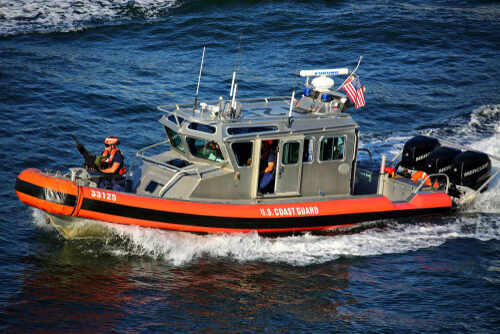
For people who do not work in public safety, “multi-agency response” can sound like a polite phrase for chaos. In San Francisco Bay, it is closer to muscle memory. The Fire Department, Police Marine Units, the U.S. Coast Guard, and neighboring agencies such as Oakland’s marine units train regularly for joint operations in surf, near-shore, and open-bay conditions. When the pontoon boat capsized, that training became practice: marine units from San Francisco Police were first to reach the scene and begin extractions; fire boats, Coast Guard cutters, and additional municipal vessels quickly joined, along with private boaters who diverted from their own routes to help haul people from the water.
At peak, officials reported 11 vessels on scene, plus divers and helicopters overhead. Incident command established a shoreside triage and family reunification area at Fort Mason’s Concourse building, supported by the city’s Human Services Agency and the American Red Cross. Mayor Daniel Lurie and Fire Chief Dean Crispen both emphasized that the mission would continue “for hours” into the evening, at least until dark and potentially beyond. That posture reflects a shift in U.S. maritime rescue doctrine over the last several decades: when multiple people remain missing in cold water, the operation is treated as an active rescue for as long as environmental models give any plausible survival window, not an early transition to recovery.
Media Framing vs. Operational Reality
Coverage of the incident followed a now-familiar pattern: dramatic video of a sinking boat, interviews with shaken witnesses, and headlines using terms like “deadly capsizing” and “massive rescue” while casualty numbers were still being reconciled. National and tabloid outlets amplified the death toll framing almost immediately after the first fatality was confirmed, even as local officials were still referring to the operation as a search-and-rescue mission rather than a recovery.
From an operational perspective, this kind of framing is double-edged. On one hand, it accurately acknowledges the gravity of a situation where one person has died and others are missing. On the other, it can create public impressions—of systemic failure or recklessness—that harden before investigators have identified the underlying causes. In this case, the evidence to date supports a more nuanced view: a recreational vessel in challenging waters appears to have reached a point of instability or overload, capsized rapidly, and triggered the kind of intensive joint rescue effort that Bay agencies are built to perform. Whether anyone made negligent choices about capacity, safety equipment, or seamanship is still under investigation; no authoritative cause determination has been released.
A Pattern of Small-Boat Emergencies Around Alcatraz
This capsizing is not an isolated freak event; it fits a pattern of small-boat emergencies in the waters near Alcatraz. In prior incidents, sudden loss of stability, collision, or mechanical failure has repeatedly put small groups of boaters into the bay, with outcomes ranging from miraculous all-survivor rescues to single fatalities despite extensive search efforts. A ferry captain known locally as “Cap’n Tubby” once diverted from a night tour to rescue 10 people from a sinking boat near Alcatraz, pulling all of them to safety. In another case, three men on a 12-foot boat capsized near the island; two were picked up quickly, while the third was missing long enough to trigger a full search before being found ashore and evaluated medically.
Even outside pleasure craft, the historical record reinforces the bay’s unforgiving nature. The U.S. government’s official assessment of the famous 1962 Alcatraz escape concluded that the prisoners almost certainly drowned, pointing to the same cold temperatures and strong currents that modern rescuers confront. Later hydrodynamic simulations by Dutch water experts showed that an escape was technically possible under very specific timing and current conditions, underscoring how narrow the survival margins can be. The lesson across these episodes is consistent: San Francisco Bay is navigable and routinely enjoyed by thousands, but when something goes wrong—especially for small, lightly crewed vessels—time and training matter enormously.
1 killed, 2 missing after boat sinks in water near Alcatraz in San Francisco; rescue underway https://t.co/BaG00XwGKv pic.twitter.com/i2OFrJ3brz
— Eyewitness News (@ABC7NY) July 15, 2026
Unanswered Questions and What Comes Next
Several key aspects of the Alcatraz pontoon disaster remain unresolved, and they will shape any future judgment about responsibility. First, the mechanism of capsizing: the incident was initially described as a fire or explosion, but responders on scene saw no burn damage and reported no evidence of an active fire. Fuel slicks or exhaust may have contributed to early confusion. Investigators will be looking at loading, weight distribution across the boat’s three decks, structural integrity, and any mechanical or steering failures that could have produced rapid loss of stability.
Second, safety practices aboard: was the boat operating within design capacity for its configuration and conditions? Were life jackets available and properly worn, or were passengers effectively unprotected once they went into the water? Party pontoons are often marketed for their spaciousness and social atmosphere, not for rough-water performance; using them in choppy, current-swept channels demands more disciplined seamanship than many recreational operators realize.
Third, the information pipeline: the early spread of differing numbers—17 rescued versus 16, one missing versus two—will invite scrutiny but should be understood in context. In the first 90 minutes of a rescue, numbers are frequently “fluid,” as one broadcast team explicitly acknowledged. The integrity of the final incident report depends more on how well those numbers are reconciled with passenger manifests, witness interviews, and medical records than on the first televised tally.
What is clear already is that the bay’s emergency ecosystem did what it was designed to do: detect trouble quickly, deploy overwhelming rescue capacity, and keep searching until the probabilities of survival truly collapse. For boaters, the more sobering takeaway is that even in a city accustomed to saving people from rough water, a single afternoon on a festive pontoon can still end in irreversible loss.
Sources:
nypost.com, abc7news.com, nbcbayarea.com, news.uscg.mil, youtube.com, independent.co.uk, straitstimes.com, facebook.com, abcnews.com, bbc.com