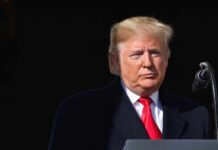


The notion that Donald Trump is secretly a Democratic operative is a textbook example of modern political conspiracy thinking: vivid, emotionally satisfying to some, but unsupported by any serious evidence and revealing far more about today’s information environment than about Trump himself.
At a Glance
- The claim that Trump works covertly for Democrats rests entirely on speculation and pattern-reading, not on documents, testimony, or verified intelligence.
- Mainstream and official investigations have repeatedly debunked adjacent conspiracy theories involving Trump, Democrats, and “deep state” plots, undercutting the narrative scaffolding that operative claims rely on.
- Jake Tapper’s on-air pushback fits a broader media effort to confront baseless operative stories, including similar unfounded claims coming from Trump’s own camp.
- Research on conspiracy beliefs shows how partisan mistrust, alternative media ecosystems, and unfalsifiable narratives make such theories persist despite repeated debunking.
- The “Democratic operative Trump” idea is best understood as an inversion of existing conspiracy narratives—a symptom of political distrust, not a credible description of American party politics.
How the “Democratic Operative Trump” Theory Is Built
To understand why Jake Tapper reacted with visible disbelief when a guest floated the idea that Donald Trump is a secret Democratic operative, you have to look at how such a theory is constructed in the first place. The core claim is simple and dramatic: Trump, long portrayed as the bane of Democrats, is in fact working for them behind the scenes, either to discredit the Republican Party or to advance Democratic interests through controlled opposition. The evidence offered for this claim tends to be circumstantial—Trump’s past social and financial ties to the Clintons, his past donations to Democratic candidates, or anecdotal moments in which his political behavior appears to advantage Democrats more than Republicans.
None of those data points, taken individually or together, amount to operational evidence. Trump did indeed maintain social relationships with Bill and Hillary Clinton in the years before his 2016 run, attending events and making donations to their foundation and campaigns, in the way many wealthy business figures hedge their political bets and buy access across the spectrum. But proximity, donations, and phone calls are the ambient currency of elite politics, not proof of covert employment. The standards for establishing that someone is a “Democratic operative” are substantially higher: you would need documents, payments, tasking communications, or credible insider testimony showing Trump took direction from Democratic strategists or institutions in exchange for political outcomes. None exist.
What the Evidence Actually Shows: Debunked Conspiracy Scaffolding
Claims about Trump as a Democratic operative are typically layered atop other conspiracy narratives, many of them promoted by Trump and his allies rather than by his opponents. That alone should give a careful reader pause. The “Spygate” theory, for example, asserted that Barack Obama’s administration planted a spy inside the Trump campaign for partisan purposes. Subsequent investigations, including the Justice Department inspector general’s review and later work overseen by Attorney General William Barr, found no evidence that the FBI infiltrated the campaign with a political spy; instead, they documented a counterintelligence investigation responding to Russian interference concerns.
Likewise, the “Clinton plan intelligence” narrative, which claimed that Democrats orchestrated a disinformation plan to frame Trump for Russia collusion, has been examined in considerable detail. Special counsel John Durham spent years probing the origins of the Russia investigation and the role of Clinton-linked actors; his 2023 final report and annexes did not substantiate the idea of a coordinated Democratic plot using fabricated evidence to direct federal law enforcement. Durham criticized aspects of FBI decision-making, but he failed to produce proof of the kind of overarching Democratic operation that conspiracy theorists describe.
Even adjacent claims about Democrats engineering foreign entanglements to ensnare Trump have collapsed under scrutiny. FactCheck.org, for instance, traced and debunked viral posts alleging a “deep state” Democratic conspiracy to drag Trump into war with Iran, concluding that the theory was not only unsupported but directly contradicted by public statements in which Democratic leaders warned against escalation. When the supporting scaffolding of a meta-conspiracy repeatedly fails fact-checks and legal reviews, it becomes a very weak foundation on which to build the even more extraordinary claim that Trump himself is secretly working for Democrats.
Jake Tapper, Operative Claims, and Media Pushback
Jake Tapper’s gobsmacked reaction to the idea that Trump is a Democratic operative fits cleanly within a pattern of journalists confronting operative accusations that arrive without corroboration. In 2016, when a protester at a Nevada rally was falsely portrayed by Trump allies as attempting to assassinate Trump and described as a Democratic “plant” or “operative,” Tapper pressed campaign manager Kellyanne Conway with the fact that the claim was baseless. That episode demonstrated how easily “operative” language could be weaponized to transform ordinary political conflict—or even simple protest—into something sinister.
Tapper has also pushed back on conspiracy narratives from Trump’s side about Russia and Ukraine. When Trump claimed his campaign had rebuffed all Russian outreach, Tapper pointed to the Mueller report’s documentation of multiple welcomed contacts with Russian representatives, calling Trump’s blanket denial a lie. FactCheck.org’s review of Trump’s “whoppers” highlighted similar corrections, including Tapper’s role in underscoring the total lack of evidence for Trump’s insistence that Ukraine possessed a hidden DNC server or had orchestrated the hack to help Democrats.
Critics of Tapper and CNN, especially from the right, argue that mainstream journalists themselves participated in an overblown Russia-collusion narrative, citing the Steele dossier’s funding by the DNC and Clinton campaign as evidence of partisan motives. Here, it is important to distinguish between media framing mistakes or excesses—some coverage certainly treated unverified dossier claims too casually—and the much stronger allegation that journalists or Democrats were running a coordinated disinformation operation that secretly controlled Trump’s behavior. The former criticism is a media-ethics question, and a legitimate one. The latter is a conspiracy claim that, again, lacks the documentary and testimonial foundation it would require to be taken seriously as a description of how American politics works.
Why These Theories Persist: The Psychology and Media Dynamics of Conspiracy Thinking
If the operative theory is so weak on evidence, why does it persist—and even invert, from Trump accusing Democrats of conspiracies to some opponents portraying Trump as their hidden asset? Social science offers a sobering answer. Studies of conspiracy beliefs around major events, including an attempted assassination of Trump, find that personal networks and alternative media are the strongest predictors of endorsing conspiratorial narratives. Information heard from friends, influencers, and ideologically congenial platforms carries more weight than official reports or mainstream news, especially for audiences already distrustful of institutions.
Research on media exposure shows that alternative outlets that actively support conspiratorial claims tend to increase belief in those claims, whereas mainstream debunking has only limited dampening effects—and mainly among people who already have higher baseline trust in journalists and political institutions. In polarized environments, debunking can even backfire, being interpreted as evidence of a cover-up rather than a corrective. Field guides to political conspiracy theories describe an “unfalsifiable frame” in which each official denial becomes proof of deeper concealment and each absence of documentary evidence is treated as proof of how thorough the conspiracy must be.
That unfalsifiable logic is clearly visible in the strongest defenses of the “Democratic operative Trump” idea. Side B—the skeptical, evidence-based position—points out that no financial audit, intelligence file, or sworn testimony has surfaced showing operational coordination between Trump and Democratic operatives; proponents reply that this merely shows how effectively both parties have hidden their tracks. At that point, adjudication becomes impossible; any conceivable document or statement can be absorbed into the theory as either part of the plot or part of the cover story. The theory survives not because it is evidentially strong, but because it is psychologically insulated.
Inversion and Projection: From “Deep State” to “Secret Agent”
There is an additional structural move at work that is easy to miss if you focus only on Trump or Tapper. Many of the theories that animate Trump’s base—Spygate, Obamagate, “deep state” sabotage—assert that Democrats and career officials in intelligence and law enforcement are conspiring in secret to thwart his agenda. When those theories are widely debunked, some opponents of Trump respond not by abandoning the conspiratorial frame but by inverting it: if Trump’s claims of a Democratic plot against him were false, perhaps Trump himself was the plot, a “Trojan horse” sent to wreck the Republican Party from within.
Historically, American politics has seen versions of this inversion before. Barry Goldwater and George McGovern were, at different moments, accused of being stooges whose extremism would discredit their respective parties. But the leap from “bad for his party” to “secret operative for the opposition” is new in its intensity and rooted in today’s information ecosystem, where elaborate speculation can circulate with minimal friction. As the BBC’s 2015 examination of the idea that Trump might be a “Democratic secret agent” noted, even then the claim rested largely on the coincidence of his friendships and donations rather than on any operational arrangement—and was treated by serious observers as a joke more than a hypothesis.
Legal and institutional baselines further weaken the operative story. The Republican-led Senate Intelligence Committee, after extensive investigation, reported no direct evidence of a conspiracy between the Trump campaign and Russia, let alone a Democratic-directed operation using Trump as an asset. Multiple inspector general and special counsel reviews have found flaws, misjudgments, and occasional misconduct in the handling of Trump-related investigations, but none has produced the kind of smoking-gun coordination across parties and branches that any robust “secret agent” narrative would require.
Jake Tapper Gobsmacked by Guest’s Wild Trump Theory: ‘Are You Saying He’s a Democratic Operative?’ https://t.co/0z0EcOoouL
— Mediaite (@Mediaite) July 14, 2026
What an Evidence-Based Standard Requires—and Why It Matters
For a theory as sweeping as “Trump is a Democratic operative” to merit serious consideration, it would need to meet basic evidentiary standards. At minimum, that would mean:
First, a document trail—emails, memos, financial transfers—showing that Democratic organizations or operatives directed Trump’s political actions in specific, verifiable ways. Second, corroborated insider testimony from named individuals with direct knowledge of such coordination, ideally under oath. Third, consistency across independent lines of evidence: campaign finance records, intelligence assessments, and internal party communications all pointing to the same operational relationship. Side A, the pro-theory position, offers none of these. Its strongest “opportunities” are hypothetical: a future forensic audit, declassified intelligence, or subpoena-backed testimony that might, someday, reveal such links.
In contrast, what we do have are repeated examples of conspiratorial narratives around Trump being investigated and found wanting, and a growing body of social science explaining why such narratives remain compelling for a segment of the public despite that. That contrast is why seasoned observers like Tapper respond with incredulity when a guest casually escalates from critiquing Trump’s behavior to alleging secret Democratic control. The leap is not just politically explosive; it is analytically unsound.
For a politically literate adult audience, the deeper takeaway is not about defending Trump or Democrats. It is about insisting on evidence-based standards in an era when “operative” accusations are easy to make and hard to disprove to the satisfaction of those inclined to believe them. The more our public discourse relies on unfalsifiable conspiracy frames, the harder it becomes to hold anyone accountable for real misconduct, because the signal is drowned in noise. On that terrain, incredulity is not naiveté; it is a necessary form of intellectual hygiene.
Sources:
mediaite.com, docs.house.gov, en.wikipedia.org, academic.oup.com, theintercept.com, abcnews.go.com, pmc.ncbi.nlm.nih.gov, nbcnews.com, factcheck.org, thefederalist.com, youtube.com, theweek.com, brookings.edu, journals.sagepub.com