

Iran’s ruling clerics appear to be putting ordinary civilians in the crosshairs—literally—by urging “human chains” around power plants as U.S. pressure ramps up over the Strait of Hormuz.
Quick Take
- Iranian officials publicly called for civilians—especially youth, students, and artists—to gather at power plants, a move critics describe as using human shields.
- Reports and videos describe Iranian security forces embedding in civilian locations including schools, hospitals, stadiums, and crowded streets to complicate precision strikes.
- The development comes as President Donald Trump ties escalating U.S. pressure to a deadline related to the Strait of Hormuz, a global energy chokepoint.
- Opposition voices are urging civilians to avoid regime-linked sites, while Israel has issued public warnings aimed at reducing civilian harm.
Human “Chains” at Power Plants Raise Alarms
Iranian Deputy Minister of Youth and Sports Alireza Rahimi called for civilians to form “human chains” at power plants, according to footage and reporting summarized by multiple outlets. The appeal reportedly targeted “youth,” students, and artists, and it landed amid intensified airstrike activity around Tehran. Critics argue the tactic shifts risk from military assets to ordinary families—an especially volatile move when key infrastructure becomes both a shield and a potential target.
Iran’s leadership has long framed its posture as national defense, but the practical effect of massing civilians near strategic sites is to raise the political and moral cost of any strike. From a U.S. perspective, this creates a familiar dilemma: adversaries can try to deter action by making collateral damage more likely, then leverage that damage for propaganda. The available reporting does not include a pro-regime justification beyond “defense” narratives.
Embedding Security Forces in Civilian Sites: What’s Being Reported
Analysts and witnesses describe Iranian security units operating from or near civilian facilities—schools, hospitals, and large public venues—along with weaponry placed in populated areas. One report describes the regime shifting checkpoints and armed presence into busier streets, using congestion and crowds as cover. Another describes security personnel blending into civilian clothing while carrying weapons, a tactic that further blurs the line between civilian and military spaces.
Some of the most disputed details involve casualty claims from strikes on high-profile sites, including reports that hundreds were killed after strikes hit a major stadium complex. Those numbers remain difficult to independently verify from the provided materials alone, and the research itself notes uncertainty around the scale. Still, the pattern described across sources is consistent: regime-aligned forces appear to be leveraging civilian density and essential services to complicate targeting decisions.
Trump’s Hormuz Pressure Raises the Stakes for Energy and Markets
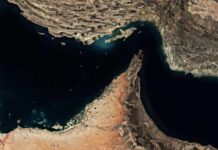
The timing matters because the Strait of Hormuz remains a central artery for global oil flows, and any escalation around it tends to ripple into energy prices and inflation pressures worldwide. The research ties the regime’s “human chain” messaging to a looming deadline issued by President Trump related to reopening or securing Hormuz transit. When governments gamble with infrastructure like power plants, the consequence is not only human danger but also systemic economic risk.
Civilians Caught Between Regime Survival and Wartime Reality
Opposition messaging has emphasized a basic survival instruction: civilians should avoid regime-linked facilities and security concentrations. Reports also describe a parallel information fight inside Iran, with residents sharing tips and footage that can expose where security forces are operating. That dynamic undercuts the regime’s “rally around the flag” strategy by highlighting a moral question many Americans recognize: leaders who claim to represent “the people” should not treat those people as expendable tools.
What to Watch Next: Verification, Warnings, and the Propaganda War
The strongest near-term indicator will be whether the regime’s call for civilian gatherings expands beyond power plants into other infrastructure nodes, and whether warning systems or shelters appear for ordinary Iranians. The research highlights a contrast: Israel has issued public guidance aimed at reducing civilian harm, while reports say Iran has not built comparable protections despite years of escalation. With limited transparent data from inside Iran, verification will depend on continued cross-checking of videos, satellite imagery, and consistent eyewitness accounts.
For Americans watching from afar, the broader lesson is familiar: authoritarian systems often prioritize regime survival over human life, then use civilian suffering as leverage. That doesn’t automatically validate every wartime claim made by any side, but it does reinforce why credible evidence, transparent targeting standards, and independent verification matter—especially when strategic infrastructure and civilian populations are deliberately intertwined.
Sources:
Iran Is Using Its Citizens as Human Shields
Jerusalem Post – Iran News (article-891362)
Iran International – (202603130792)