
The real stakes in Trump’s latest clash with NATO are not a mysterious “kill list” or a last‑minute aircraft swap, but a familiar, high‑risk strategy: using the threat of U.S. withdrawal from the alliance as leverage—this time over Europe’s refusal to join his war with Iran—despite clear legal barriers and no formal steps toward an exit.
Key Points
- Trump has escalated rhetoric, calling NATO a “paper tiger” and saying U.S. membership is “beyond reconsideration,” explicitly tying his anger to European refusal to join U.S. operations against Iran.
- Despite the threats, no legal notice of denunciation under the North Atlantic Treaty has been filed, and U.S. law now bars a president from unilaterally withdrawing from NATO without Congress.
- The Iran dispute fits a broader pattern of coercive alliance bargaining: Washington brandishes exit threats to push allies on burden‑sharing and political support, but has never actually left NATO.
- NATO, far from collapsing, has expanded (Finland, Sweden), raised defense spending, and launched new multibillion‑dollar projects, directly contesting Trump’s “paper tiger” label.
- The “kill list” and aircraft choice are political symbolism layered onto a structural reality: Trump can roil NATO and unsettle allies, but cannot personally take the United States out of the alliance under current law.
Trump’s NATO Threats: What He Is Really Doing
Trump’s language about NATO in the Iran crisis is unusually stark even by his own standards. In interviews and social posts he has described the 77‑year‑old alliance as a “paper tiger,” insisted he has “never been influenced by NATO,” and said reconsidering U.S. membership is “beyondation”—his way of claiming the issue is beyond mere reconsideration. He has publicly linked this anger to European governments’ refusal to commit ships, bases, or offensive support for U.S. strikes around the Strait of Hormuz, describing their non‑participation as betrayal after “trillions” spent defending them.
This is not happening in a vacuum. Trump has used similar rhetoric for years: calling allies “delinquents” on defense spending, demanding first 2%, then 4% of GDP from European capitals, and boasting that he “forced” allies to pay $100 billion more. What is new in this cycle is the explicit threat to punish allies for refusing to join an offensive war that sits outside NATO’s defensive charter, coupled with talk of reevaluating membership once the Iran confrontation is “over.”
Diplomats and analysts across outlets like TIME, The Hill, and CNN consistently frame these statements as coercive threats rather than concrete policy steps—part of a pattern of “more bluff” used to intensify pressure during crises. That judgment is reinforced by the legal and institutional landscape.
The Hard Legal Wall: Why A President Can’t Just Walk Out of NATO
Under the North Atlantic Treaty, a country that wants to leave must file a formal notice of denunciation; this starts a one‑year clock to withdrawal. In the current dispute, no such notice has been filed with the U.S. government, which is the treaty’s depositary. Trump’s threats therefore remain rhetorical—however aggressive—rather than the beginning of an actual legal process.
More important, Congress has changed the legal terrain since Trump first floated leaving NATO in his earlier term. In the National Defense Authorization Act for Fiscal Year 2024, lawmakers enacted Section 1250A, now codified at 22 U.S.C. § 1928f. That provision explicitly prohibits the president from withdrawing from NATO or using appropriated funds “to support, directly or indirectly, any decision to withdraw” without either:
– the advice and consent of two‑thirds of the Senate, or
– a separate act of Congress authorizing withdrawal.
Legal analysts describe this as the first time in U.S. history that Congress has singled out a specific treaty and barred unilateral presidential withdrawal. The sponsors—Marco Rubio and Tim Kaine—made their intent clear: to prevent any president, not just Trump, from pulling out of NATO on his own. In parallel, earlier bipartisan language warned that a unilateral NATO exit would be “blatantly illegal” and “strategically reckless,” underlining a broad congressional consensus.
Taken together, this means Trump today can threaten, complain, “reevaluate,” and even order U.S. troops cut or moved around Europe, but he cannot lawfully withdraw the United States from NATO without Congress. Any serious attempt to do so would trigger both statutory violations and an immediate constitutional confrontation in courts and on Capitol Hill.
Iran, Article 5, and Why Europe Says No
The Iran confrontation that catalyzed this latest NATO crisis follows a familiar pattern. U.S. Central Command strikes on Iranian targets, threats to “knock out” Iran’s energy infrastructure “in a small part of an afternoon,” and Tehran’s counter‑moves around the Strait of Hormuz create an acute, globally significant security issue.[Telegraph/CNN summaries] Yet they do not fit NATO’s core legal obligation: collective defense under Article 5 when a member is attacked.
European governments have repeatedly said they lack a legal mandate—and in many cases a political appetite—for joining offensive U.S. operations against Iran. French officials, for example, framed their position as “not warranted for offensive missions,” drawing a clear line between supporting freedom of navigation and endorsing preemptive strikes. The refusal to send warships or open bases is therefore not necessarily a test of NATO’s effectiveness, as Trump implies, but of national legal constraints and strategic judgment in a conflict where the alliance was not collectively attacked.
This distinction matters. Alliance lawyers and former commanders point out that NATO “isn’t set up to have the obligation to support an ally that starts a war somewhere,” which is an accurate description of the treaty’s design. Trump’s effort to recast this as evidence that the alliance “failed to meet expectations during the war on Iran” is a political argument, not a reflection of NATO’s charter.
Coercive Alliance Bargaining: Threats Without Exit
Political scientists who have studied U.S.‑NATO crises over the past decade describe Trump’s behavior as a textbook case of coercive alliance bargaining. In this model, the senior ally—in this case the United States—brandishes threats of abandonment or withdrawal to extract concessions on burden‑sharing, specific policies, or support in third‑country conflicts. Since 2017, there have been at least four cycles in which Trump or his administration floated the idea of leaving NATO or sharply downgrading commitments, but none culminated in a formal withdrawal notice.
Empirical work on European public opinion shows that these threats do have effects. One study found that U.S. withdrawal talk measurably increased European willingness to spend more on defense and decreased support for maintaining current arrangements. In other words, the rhetoric works as pressure. It also imposes costs: allies grow more anxious about U.S. reliability and begin to debate decoupling or hedging with their own independent capabilities.
The Iran‑linked threat fits that pattern neatly. Trump portrays NATO as freeloading and disloyal; allies respond by unveiling new multibillion‑dollar projects and accelerating their own spending to signal seriousness. At the systemic level, the strategy is less about literally walking out of NATO and more about shifting the internal balance of obligation and deference inside the alliance.
NATO’s Response: Expansion, Spending, and Projects
Trump’s “paper tiger” label sits awkwardly against NATO’s observable trajectory. Since Russia’s full‑scale invasion of Ukraine, Finland and Sweden have joined the alliance, expanding its reach in the Baltic and Arctic—hardly the behavior of a moribund institution. European defense budgets have risen, with a growing number of states meeting or nearing the 2% GDP target set in 2014 and pressed aggressively by Trump himself.
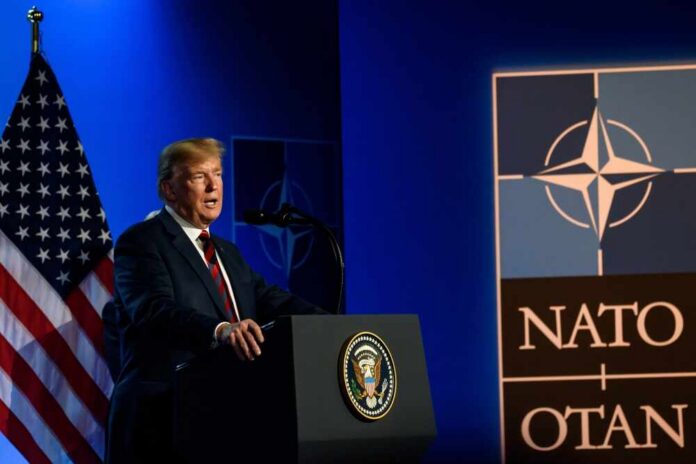
At the summit in Turkey, NATO Secretary General Mark Rutte announced new military projects worth billions, explicitly framed as a response to U.S. criticism and a demonstration of continued cohesion. These initiatives range from modernization of command structures to investments in air and missile defense, areas directly relevant to both Russian threats and incidents like Iran’s attacks on Gulf shipping.
This does not mean NATO is flawless or perfectly aligned with Washington. European governments remain reluctant to join offensive Mideast operations; capabilities are uneven; political will varies. But measured by membership growth, spending trends, and operational activity, the evidence points to an alliance under strain and adaptation, not one that matches Trump’s caricature of uselessness.
Rhetoric, Confusion, and Credibility
One complication in taking Trump’s NATO threats at face value is the quality and consistency of his own messaging. At the Ankara summit and in surrounding media appearances, he has referred to the “Islamic Republic of Japan” when he plainly meant Iran, mixed claims about having already neutralized Iranian nuclear material with continued bombing of non‑nuclear targets, and vacillated between insisting he does not want help in Iran and denouncing allies for not helping.[Bulwark video; Fox/CNN summaries]
Seasoned military figures such as Lt. Gen. Mark Hertling have criticized this as evidence of strategic incoherence: unclear war aims, contradictory nuclear policy, and off‑the‑cuff remarks that leave both commanders and allies guessing what the United States is really trying to achieve.[Bulwark video] When the same voice proposes tearing up a cornerstone alliance, many observers discount the threat as another instance of improvised leverage rather than a carefully prepared pivot in U.S. grand strategy.
Where the Real Constraint Lies—and What Could Change It
For all the drama around summits, speeches, and aircraft choices, the decisive constraints on U.S. NATO withdrawal today are legal and institutional. Unless Congress repeals or rewrites Section 1250A, any president remains bound by the requirement for Senate consent or an explicit statute to exit the treaty. That is a high bar in a polarized environment where pro‑NATO sentiment remains strong in both parties’ foreign policy establishments.
Could that change? In theory, yes. A future Congress could pass new legislation authorizing withdrawal, or a sustained political campaign could shift public opinion enough to make a two‑thirds Senate vote plausible. Trump’s supporters occasionally float these scenarios. But there is no sign today of such a coalition forming; if anything, his threats have triggered the opposite response, cementing cross‑party efforts to shield NATO from unilateral executive action.
More realistic, and more consistent with the last decade, is continued use of NATO as a bargaining chip: troop movements, defense‑spending ultimatums, selective cooperation, and periodic flirtations with exit to energize domestic constituencies. That strategy can fray trust and complicate crisis management—as seen in the Iran dispute—but it does not amount to a literal break with the alliance.
What It Means for Readers Watching the Drama
For an informed observer trying to separate signal from noise, a few points are worth holding onto. First, Trump’s anger over Iran and NATO is real; so are the European legal and political reasons for staying out of his war. Second, his description of NATO as a “paper tiger” is a political framing that conflicts with the alliance’s actual expansion and investment patterns. Third, the United States cannot, under current law, leave NATO on the basis of a president’s personal decision or social‑media declaration.
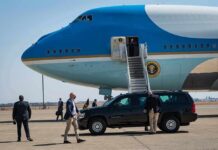
The “kill list” motif and the fixation on which aircraft the president boards make for striking imagery, but they are secondary to the structural forces at work: congressional guardrails, alliance law, European risk calculations, and a U.S. leader who has learned that threatening abandonment can move allies—without ever having to cross the Rubicon of an actual exit.
Sources:
redstate.com, time.com, thehill.com, atlanticcouncil.org, krishnamoorthi.house.gov, en.wikipedia.org, youtube.com, facebook.com, habtoorresearch.com, everycrsreport.com, defensepriorities.org, cambridge.org
Trump on further US troop cuts in Europe: "We will see. I am very disappointed by NATO." No decision made yet, despite privately floating a one-third reduction this spring after allies refused to join his Iran operation. Didn't threaten full NATO withdrawal at the summit though.
— MacroSphere (@MacroSphereX) July 9, 2026