
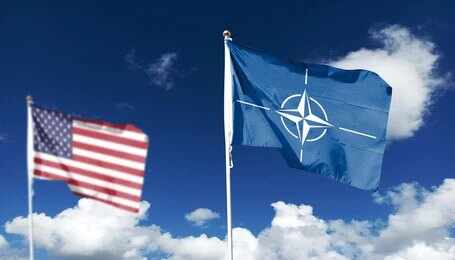
The 2026 NATO Summit in Ankara arrives as a structural reckoning rather than a routine gathering — a moment when the alliance’s long-deferred question of who bears the burden of European security can no longer be managed with communiqués and pledges alone.
At a Glance
- All 32 NATO member states convened in Ankara on July 7–8, 2026, with defense spending, Ukraine, Middle East security, and defense industrial production as the central agenda items.
- The Trump administration is pressing European allies to assume primary responsibility for continental defense, building on the 5% GDP spending commitment made at the 2025 Hague Summit.
- Ukrainian President Zelenskyy was not given a formal speech slot at the main plenary session, reflecting Washington’s posture of treating Ukraine as a subject of alliance deliberation rather than a co-equal participant.
- Trump held lengthy calls with both Putin and Zelenskyy in the days before the summit, and met Zelenskyy in Ankara — though that meeting was scheduled toward the end of Trump’s visit, after the main NATO business concluded.
- The summit doubles as a showcase for Turkey’s growing defense industry ambitions and Erdoğan’s bid to position Ankara as an indispensable strategic pivot between Europe, Russia, and the Gulf.
The Burden-Sharing Reckoning, Decades in the Making
Every American president since the end of the Cold War has complained, with varying degrees of public theater, that European allies free-ride on American defense guarantees. What makes the current iteration different is not the complaint itself — Trump tweeted the 2% spending demand as far back as July 2018 — but the degree to which coercive rhetoric has actually produced results. At the 2025 Hague Summit, European NATO members committed to spending 3.5% of GDP on core defense plus an additional 1.5% on resilience, infrastructure, and cybersecurity, reaching a combined 5% target by 2035. That is an extraordinary leap from the 2% benchmark that most allies spent years failing to meet, and it happened in direct response to sustained American pressure.
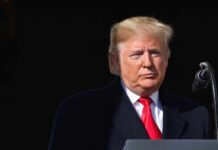
The Ankara Summit’s task is to move from that political commitment to operational reality — what CSIS analysts have called “NATO 3.0,” a rebalanced alliance where Europe is the first responder for its own security and the United States provides extended deterrence and reinforcement rather than forward-deployed mass. Trump arrived in Ankara pressing allies on whether the spending pledges are translating into actual combat-ready capabilities, not merely budget line items. U.S. Ambassador to NATO Matt Whitaker publicly confirmed Trump’s urgency on the 5% goal in the days before the summit. Germany, for its part, noted it is doubling its defense budget — a concrete data point that the pressure campaign is yielding measurable changes in allied behavior.
Zelenskyy’s Absence from the Plenary and What It Signals
The decision to exclude Ukrainian President Zelenskyy from a formal address at the main plenary session is the summit’s most symbolically charged element, and it reflects a deliberate American calculation rather than a procedural oversight. Trump has consistently framed the Ukraine war as a problem requiring diplomatic resolution, not indefinite military escalation — and positioning Zelenskyy as a supplicant at the margins of the summit rather than a featured voice at its center reinforces that framing. The official NATO schedule did include Zelenskyy making remarks alongside Secretary General Mark Rutte at a Defense Industry Forum on July 7, and a face-to-face meeting with Trump was confirmed — but scheduled toward the end of Trump’s visit, after the alliance’s core business was done.
This sequencing matters. A senior U.S. official told The Guardian that Trump views the battlefield as largely frozen and sees an urgent need to revive diplomacy. Trump held a 90-minute call with Putin on July 4 — described by Kremlin aide Yuri Ushakov as “business-like and highly constructive” — and a separate call with Zelenskyy on the same day, which Zelenskyy described as “very good.” The diplomatic choreography places Washington as the mediating power between Kyiv and Moscow, with the NATO summit as backdrop rather than venue for any breakthrough. That is a fundamentally different role than the one the alliance played at its 2024 Washington summit, which centered on bolstering long-term support for Ukraine.
What the summit declaration does preserve is the alliance’s formal financial commitment to Ukraine: leaders are expected to affirm €70 billion in military equipment, assistance, and training for 2026, with pledges to sustain equivalent levels in 2027. Europe is now carrying the larger share of that financial burden, though CSIS analysts note that success still depends on continued U.S. industrial support — particularly in ammunition production and advanced systems. Zelenskyy arrived in Ankara pressing allies for additional air defense systems following a devastating Russian overnight strike on Kyiv that killed 14 and wounded more than 100 in the days before the summit, a strike widely interpreted as a deliberate attempt to assert Russian leverage at the moment of maximum allied attention.
Turkey’s Strategic Moment and the Host’s Agenda
No NATO summit agenda is politically neutral, and Ankara’s is especially shaped by Turkish priorities. This is only the second time Turkey has hosted a summit — the first was Istanbul in 2004 — and President Erdoğan is using the occasion to accelerate several long-standing objectives. Turkey will press for the lifting of all restrictions on defense trade within NATO, a demand that reflects its growing domestic defense industry and its frustration at being excluded from certain allied procurement arrangements. Ankara also wants to deepen the Istanbul Cooperation Initiative, which links NATO to Gulf partners including Bahrain, Kuwait, Qatar, and the UAE, effectively expanding the alliance’s security architecture southward into a region of direct Turkish commercial and strategic interest.
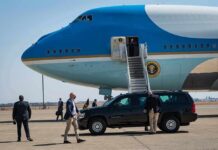
The Black Sea dimension is equally prominent. Turkey controls the Bosphorus and Dardanelles under the 1936 Montreux Convention — the legal instrument that has governed naval access to the Black Sea throughout the Ukraine conflict — and positions itself as the pivotal stabilizing power between Europe, Russia, and the Caucasus. Erdoğan has leveraged this geography throughout the war, brokering the 2022 grain corridor deal and maintaining working relations with Moscow while remaining formally within the alliance. The Trump administration’s relative indifference to European concerns about democratic backsliding in Turkey has eased the political friction that complicated earlier summits, giving Erdoğan unusual latitude to shape the gathering’s tone. For Turkey, hosting Trump’s first visit to the country as president — he is the first sitting U.S. president to visit Turkey in 17 years — is itself a diplomatic prize.
The Iran Complication and Alliance Cohesion
Hovering over the entire summit is the fallout from the U.S.-led strikes on Iran — a conflict that exposed sharp divisions within the alliance. Several European governments restricted the use of their military bases by American forces during the Iran campaign, a restriction Trump cited explicitly on Truth Social in the days before the summit as evidence that allies “were not there for America when Washington needed their support the most.” European officials, in turn, are concerned that Trump’s irritation over their Iran response could overshadow the summit’s intended focus on defense spending progress and Ukraine.
The summit declaration is expected to address this directly, with leaders reiterating that “Iran must never have a nuclear weapon” and calling on Tehran to respect freedom of navigation in the Strait of Hormuz. But the underlying tension — between an American administration that conducted a major military operation without full allied consultation and European governments that withheld basing rights in response — is a cohesion problem that a communiqué cannot resolve. CSIS analysts frame it plainly: cohesion does not require agreement on every operation, but restoring trust after the Iran episode requires renewed commitment to consultation and transparency within the alliance.
ZELENSKY TO URGE NATO FOR MORE AIR DEFENCE SYSTEMS AMID RUSSIAN ATTACKS
Ukrainian President Volodymyr Zelensky is expected to urge NATO allies to provide additional air defence systems as Russia continues its missile and drone attacks across Ukraine.
His appeal comes after a… pic.twitter.com/klZyjVWS3O
— IwereNews.com (@IwereNews) July 7, 2026
What Success at Ankara Actually Looks Like
The Ankara Summit is not a pivot point for NATO’s existence — the alliance has absorbed worse internal friction — but it is a test of whether the political bargain struck at The Hague can be operationalized under sustained American pressure. The core question is whether higher spending pledges are producing deployable forces and sustained readiness, or merely satisfying accounting targets. Research published in International Organization found that U.S. threats of withdrawal do increase European public willingness to spend on defense — but simultaneously decrease support for cooperation within NATO, creating a structural tension between the coercive strategy’s short-term gains and its long-term costs to alliance cohesion.
Trump’s approach has, by the evidence, moved the needle on European defense investment in ways that years of diplomatic persuasion did not. The 5% GDP commitment at The Hague was a landmark. The Ankara Summit’s job is to ensure that commitment survives contact with parliamentary budget processes, defense industrial bottlenecks, and the political temptation — once American pressure eases — to revert to the comfortable underspending of the post-Cold War decades. Whether it succeeds will be measured not in the language of the summit declaration but in the defense budgets, production contracts, and deployable brigade counts of the years that follow.
Sources:
thegatewaypundit.com, thenews.com.pk, reuters.com, youtube.com, atlanticcouncil.org, nato.int, facebook.com