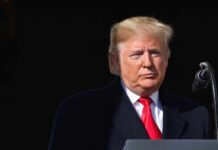


President Trump’s push to shrink the Office of the Director of National Intelligence has revived a long fight over whether the agency is a needed coordinator or a bloated layer of bureaucracy.
Quick Take
- Trump directed acting Director of National Intelligence William Pulte to downsize the office and move staff back to home agencies.[1][2]
- Supporters say the office has grown too large and too political since it was created after 9/11.[1][3]
- Critics warn that an inexperienced acting chief and political staffing cuts could weaken oversight.[4][6]
- The fight has already stirred bipartisan backlash and fresh concern inside Congress.[1][5]
Trump Targets a Bureaucracy He Says Grew Too Large
Trump has told William Pulte to start cutting the Office of the Director of National Intelligence and to send staff back to their home agencies.[1][2] Reporting says Trump wants the office smaller, not just reshuffled on paper.[2][6] He also pointed to employees tied to prior Democratic administrations, which made the move look political to critics and like a long-overdue cleanup to supporters.[1][3][5]
That split fits a familiar Washington pattern. The office was created after the September 11 attacks to improve intelligence sharing and help agencies “connect the dots.”[3][7] Trump allies argue that purpose has been stretched too far and that the office now duplicates work already done elsewhere.[1] Critics answer that any sharp cut to the top coordinating office could weaken how the entire intelligence system works.
Why Conservatives See a Real Reform Case
For many conservatives, the strongest argument is simple: federal intelligence should serve the mission, not protect its own turf. The Washington Times reported that security experts and lawmakers have long called the office bureaucratically bloated and vulnerable to politicization.[1] Senator Tom Cotton publicly backed downsizing and said officers should return to their home agencies to do actual intelligence work.[1] That message lines up with a broader push for smaller, less ideological government.
There is also a clear efficiency argument. Reuters reported that the office had already been cut by about 40 percent under Tulsi Gabbard before Pulte took over.[5] That suggests the Trump team sees the current move as part of a larger streamlining effort, not a sudden purge from nowhere.[2][5] Supporters say the goal is to trim overlap, reduce waste, and strip away layers that slow decisions without adding real value.
Why Critics Say the Move Smells Political
The loudest criticism is that Pulte has no intelligence background.[4][6] Reporters from multiple outlets described him as a housing official and business figure who was placed in charge despite that gap.[4][6] That matters because ODNI oversees coordination across 18 intelligence agencies, and its job depends on trust, judgment, and experience.[3][7] Critics say a weak interim leader makes the whole effort look like loyalty testing instead of serious reform.
🚨 JUST IN: President Trump has instructed incoming acting Director of National Intelligence Bill Pulte to IMMEDIATELY start FIRING and downsizing the Deep State
LFG! No wonder they're panicking over Pulte 🔥
"Just like they did on Border Funding, the Radical Left Dumocrats are… pic.twitter.com/WpM3VUzWYs
— War Correspondent (@warDaniel47) June 15, 2026
There is also the issue of motive. Reuters and other outlets reported that Trump wanted employees from the Obama and Biden eras removed, and some coverage tied the move to election-related intelligence disputes.[1][5][6] That does not prove every cut is improper. But it does show why opponents see the plan as part of a broader pattern of punishing perceived enemies and tightening political control over sensitive institutions.
Congress Faces a Familiar Intelligence Fight
The fight now lands in a Congress that already distrusts this area of government. Reuters reported that the personnel battle is complicating work on surveillance reauthorization, including Foreign Intelligence Surveillance Act Section 702.[5] At the same time, the office’s defenders point out that ODNI exists to provide oversight and coordination across a fragmented system built after a major national security failure.[3][7] That history gives the agency both a reason to exist and a target on its back.
What happens next will turn on documents, not slogans. The public record in the current reporting does not include the actual reorganization memo, staffing tables, or budget order that would show the exact scope of the cuts.[1][2][5] Until those records surface, both sides will keep using the same facts to tell opposite stories: one about overdue reform, the other about political capture of the intelligence system.
Sources:
[1] Web – ODNI crisis brings up decades-old criticism of the intelligence office
[2] Web – Trump directs interim US intelligence chief Bill Pulte to downsize …
[3] Web – Trump primes Pulte to downsize ODNI – Washington Examiner
[4] Web – Trump tells acting DNI Bill Pulte to start shrinking intelligence …
[5] Web – Trump Wants to Shrink National Intelligence Office – TIME
[6] Web – US intelligence employees brace for cuts under new director – Reuters
[7] Web – Trump says he hopes ‘less shackled’ Bill Pulte shrinks intelligence …