
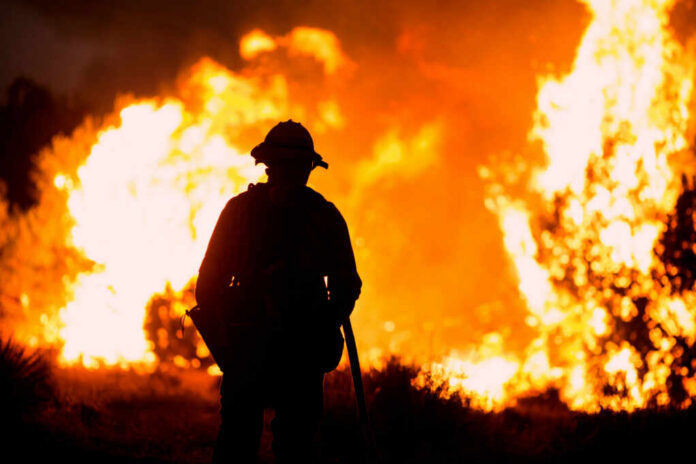
Utah’s wildfire crisis has now forced the state to treat fireworks like a public safety threat, not a holiday tradition.
Quick Take
- Governor Spencer Cox declared a state of emergency and restricted personal fireworks through July 5.
- Utah officials said more than 353 wildfires had burned over 141,000 acres, with major fires still active.
- State leaders blamed most of the fires on human activity and warned that dry, windy weather could make things worse.
- A fireworks company challenged the order’s legality, raising a new fight over enforcement and authority.
Why Utah Acted Now
Governor Spencer Cox moved after Utah fire officials warned that the state was under severe strain from heat, drought, and fast-moving fires. He declared a state of emergency and ordered a temporary ban on personal fireworks through July 5. State Forester Jamie Barnes said Utah had more than 353 wildfires burning across more than 141,000 acres, with the Cottonwood Fire and the Iron Fire among the biggest threats.
The numbers show why state leaders acted with urgency. Barnes said nearly 80 percent of Utah fires were human-caused, and he pointed to common triggers such as vehicles dragging chains, debris burning, target shooting, and fireworks. He also said all 29 counties were in severe drought, with 22 in extreme drought, and that winds could reach 50 miles per hour with humidity in the single digits. Those conditions can turn a small spark into a major fire quickly.
What the Order Changes
The emergency order gives the state more room to restrict fireworks during a dangerous stretch of the summer. The governor also said Utah had set aside $120 million for fire suppression and rehabilitation, while the Federal Emergency Management Agency would cover 75 percent of suppression costs on federal land. He warned that firefighting crews were already stretched thin and said no type one hand crews were available for new fires, which could leave Utah exposed if several fires start at once.
The ban also reflects a larger tension in state policy. Utah lawmakers had passed a 2024 statute that limited the state forester’s power to impose fireworks bans in urban areas, but the governor’s emergency order temporarily overrides that limit, according to reporting on the order. That makes the move more than a fire rule. It is also a test of how far emergency power can reach when a state believes normal rules are not enough.
Pushback and Public Debate
Not everyone accepted the governor’s move. Brian Leahy, a co-owner of a personal fireworks company, said his attorneys were reviewing the order and argued that no municipality could enforce it. He also said sales would continue without restrictions. Leahy warned that people may simply take fireworks to remote desert areas, where fires can be harder to spot and harder to stop. That challenge puts the state in a familiar bind: act fast, then defend the order in public and in court.
JUST IN: Mayor Mark Anderson announced Logan City’s full support for the statewide fireworks ban implemented yesterday by Utah Governor Spencer Cox. Personal fireworks are prohibited July 2–5, but the city's July 3 professional fireworks show will go on as planned. pic.twitter.com/xbct2duxsM
— KSL 5 TV (@KSL5TV) June 26, 2026
The timing matters because Utah is not dealing with a routine dry spell. The National Weather Service in Salt Lake City issued a rare “particularly dangerous situation” red flag warning, a sign that fire weather had reached a severe level. Reports also said the warning was the first of its kind for that office. For many Utah residents, that kind of alert confirms what they already fear: when government waits too long, the cost is measured in burned homes, dead land, and lost trust.
Why This Story Reaches Beyond Utah
Utah’s fight over fireworks fits a much wider pattern across the West, where states often tighten fire rules when drought and wind combine. It also taps into a deeper frustration shared by many Americans on both sides of the political divide. People want basic competence from government, not excuses, delay, or political theater. When officials must rely on emergency powers just to protect neighborhoods, it raises a hard question: why does the system only move when the flames are already in view?
Sources:
[1] Web – Utah declares state of emergency — and restricts fireworks as US …
[2] Web – Utah governor restricts fireworks as largest US wildfire surges …
[3] Web – Utah governor restricts fireworks as largest U.S. wildfire surges …
[4] Web – Utah governor restricts fireworks as largest US wildfire surges …
[5] Web – Utah Governor Restricts Fireworks as Largest US Wildfire Surges …
[6] Web – Utah declares a state of emergency and restricts fireworks as US …
[7] Web – Utah restricts fireworks, declares state of emergency as largest US …
[8] Web – Utah declares state of emergency, restricts fireworks as US largest …
[9] Web – Utah governor orders ban on fireworks as wildfires rage across state
[10] Web – Utah restricts fireworks, declares state of emergency as largest US …
[11] Web – Utah restricts fireworks, declares state of emergency as largest US …
[12] Web – Utah governor declares state of emergency banning fireworks for …
[13] Web – Drought and Wildfire Management Impacts – Drought.gov
[14] Web – Current Map | U.S. Drought Monitor
[15] Web – Heat, wind and drought conditions spark wildfires in US West
[16] Web – Droughts and Wildfires in Western U.S. Rangelands – ScienceDirect
[17] Web – From wildfires to drought, Mountain West states share U.S. concerns …
[18] Web – Wildfire & Water in the Western United States