

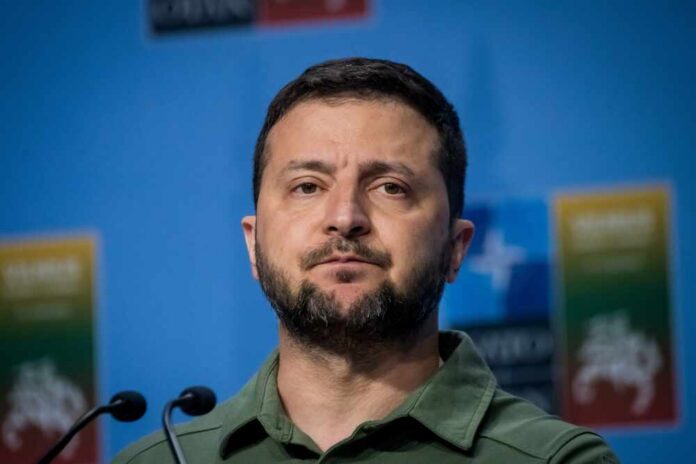
Ukraine is offering to bring its drone-warfare playbook into the Strait of Hormuz crisis—an escalation that could drag America deeper into another Middle East fight as energy prices surge at home.
Story Snapshot
- Ukrainian President Volodymyr Zelenskyy said Ukraine is ready to help the U.S. unblock the Strait of Hormuz, citing Ukraine’s Black Sea corridor experience.
- Iran’s move to choke Hormuz came after U.S.-Israeli military actions, disrupting a chokepoint that handles roughly 20% of global oil and LNG flows.
- Zelenskyy’s offer is tied to Ukraine’s push for long-term Gulf defense deals and potential energy cooperation amid a global price shock.
- Reports indicate coalition talks are underway, but some conditions and timelines remain unclear, including when secure navigation can realistically resume.
Zelenskyy’s Hormuz pitch puts Ukraine in the middle of a U.S.-led standoff
President Volodymyr Zelenskyy publicly offered Ukraine’s help to unblock the Strait of Hormuz during a March 30 online Q&A, arguing Kyiv has real-world experience restoring trade lanes under fire. Ukrainian outlets and follow-up reporting said the U.S. is leading the response under President Donald Trump, with Ukraine positioning itself as a technical partner rather than the primary driver. The offer lands as voters debate how far America should go in yet another overseas confrontation.
Ukraine’s argument is straightforward: in the Black Sea, Kyiv used sea drones, missiles, and electronic warfare to push a larger fleet away from key routes and to enable a grain corridor even without a formal ceasefire. Supporters say that record makes Ukraine a credible source of tactics for escorting or defending commercial traffic. Skeptics note that the Hormuz environment includes different geography, different escalation risks, and a direct U.S.-Iran confrontation that can’t be “droned away” by technology alone.
Why Hormuz matters to Americans: energy shock, inflation pressure, and war footing
The Strait of Hormuz is a narrow chokepoint between Iran and Oman, and reporting in the research describes it as handling roughly one-fifth of global oil and LNG flows. When Tehran blocks or threatens the passage, the damage is not theoretical: prices jump, shipping insurance spikes, and downstream costs hit families quickly through fuel, groceries, and transport. For a conservative audience already wary of fiscal mismanagement and inflation, this is exactly how foreign crises become kitchen-table pain.
That domestic pressure is colliding with a political reality inside the Right. The research notes a divided MAGA base over U.S. involvement in an Iran war and renewed scrutiny of unconditional support for Israel when the outcome could be a wider regional conflict. In that environment, the administration’s next steps are not just about maritime security—they are about whether the federal government can protect American interests without sliding into another open-ended war with unclear endpoints and soaring costs.
Gulf defense deals and Ukraine’s strategic sales pitch
Zelenskyy’s Hormuz message also comes with an economic and diplomatic angle. Research summaries say Ukraine is pursuing long-term defense arrangements with Gulf states, including talk of 10-year cooperation on weapons and defense technology such as sea drones, electronic warfare tools, and interceptors. Ukraine is seeking new markets and energy partnerships at the same time Europe remains strained and Russia continues its pressure campaign. For Gulf leaders facing drone and missile threats, lower-cost Ukrainian systems may look attractive.
At the same time, parts of the picture remain unresolved. The research indicates some legal formalization is still pending and that not all details about signatories and terms are publicly nailed down. It also references a G7-linked condition that secure navigation may be tied to the end of fighting—an important qualifier because it suggests a drawn-out crisis is possible even if plans and coalitions are discussed. Conservatives should read the headlines with that caution: “offers” and “readiness” are not the same as an implemented, stable corridor.
Escalation risks, constitutional guardrails, and what to watch next
The research also notes warnings and sensitivities around striking oil infrastructure—an indicator that every move near Hormuz carries massive escalation potential. A U.S.-led operation could range from limited escort missions to wider strikes, and the public record on where that line will be drawn is still incomplete in the provided material. For Americans who have watched “limited” missions morph into long occupations, the key guardrail is transparency: clear goals, clear limits, and lawful authorization for any sustained combat role.
Ukraine’s offer to help may be tactically relevant, but it also underscores a bigger question for the Trump administration: how to protect energy flows and allies without committing America to another multi-year conflict. With oil shocks affecting everyone and the base split on Iran and Israel policy, the political cost of drift is rising fast. Watch for concrete operational announcements, the scope of any coalition rules of engagement, and whether Congress is asked to authorize a broader war footing—or sidelined again.
Sources:
Zelenskyy offers to help US unblock Strait of Hormuz
Ukraine offers assistance to unblock the Strait of Hormuz
Ukraine to export weapons to Middle East under new 10-year deals, Zelensky confirms
Ukraine ready to help unblock Strait of Hormuz